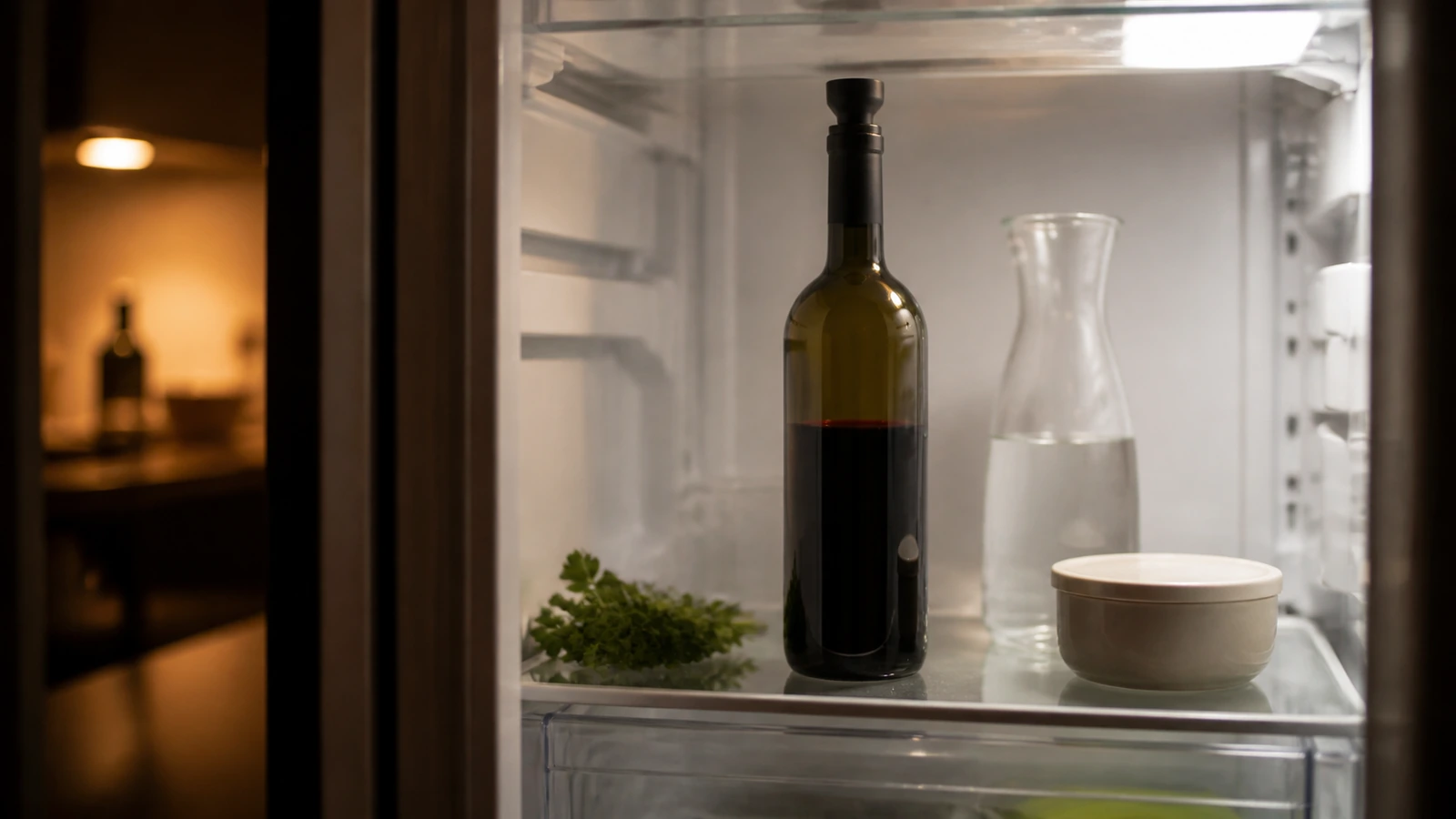
Dinner has ended, but the bottle has not.
A little less than half remains. The cork is on the table. The kitchen refrigerator is three steps away.
Then someone says the sentence that has stranded countless bottles overnight:
Do not put red wine in the fridge. You will ruin it.
The advice sounds authoritative because it contains one true idea: wine can taste wrong when served at the wrong temperature.
But it confuses serving with preserving—and then confuses both with aging.
The central idea: the refrigerator does not ruin wine. It changes the speed of the clock. Whether that helps or hurts depends on which clock you are trying to manage.
One appliance, three different clocks
A bottle can be governed by three time scales.
The serving clock: minutes to hours
Temperature changes how readily aromas escape, how prominent alcohol feels, and how acidity, bitterness, sweetness, and astringency are perceived. This clock asks:
At what temperature will the wine express itself best in the glass?
The preservation clock: hours to days after opening
Once a bottle is opened, air enters, the headspace grows, and oxygen begins participating in the wine’s next chapter. This clock asks:
How can I slow unwanted change until the next glass?
The aging clock: months to years in a sealed bottle
A wine intended to mature needs stable conditions that allow slow chemical evolution without excessive heat, light, oxygen ingress, or other stress. This clock asks:
Under what conditions should this bottle develop over time?
A kitchen refrigerator can be useful for the first two clocks.
It is generally the wrong tool for the third.
That distinction resolves most of the argument before we even close the door.
Temperature is a throttle, not a pause button
Wine does not remain chemically still after bottling. Acids, pigments, tannins, sulfur compounds, aroma molecules, oxygen, and closures continue to interact.
Temperature changes the rate of many of those reactions.
In a two-year Malbec study, bottles stored at 25°C evolved differently from bottles held at 15°C. The warmer wines lost freshness-related chemical and sensory characteristics more quickly and developed stronger dried-fruit and dried-vegetative profiles, while the cooler wines retained more violet character, color, tannins, and free sulfur dioxide. Temperature had a greater overall effect than the two closures tested (Giuffrida de Esteban et al., 2019).
A separate two-year Riesling experiment also found that storage temperature was the dominant driver of aroma, color, and sulfur-compound evolution; warmer storage accelerated change, particularly when protective sulfur dioxide was lower (Tarasov et al., 2021).
Cold therefore does not place wine outside time.
It slows the clock.
That is exactly what we want from an opened bottle we hope to revisit tomorrow. It is not necessarily what we want from a sealed bottle intended to mature gracefully for ten years.
Opening the bottle changes the system
Before opening, oxygen is limited by what was trapped during bottling and what passes through or around the closure over time.
After opening, the geometry changes.
Air fills the space above the wine. That headspace is not passive. Research tracking oxygen in sealed bottles has shown that headspace oxygen functions as a reserve: as wine consumes dissolved oxygen, more can move from the gas phase into the liquid (Vidal & Moutounet, 2006).
In a simulated tasting study, dissolved oxygen in wine rose rapidly after the bottle was opened, reaching as much as 0.99 mg/L after 15 minutes in that particular experimental setup (Venturi et al., 2018). The number is not a universal prediction for every bottle. The lesson is more important than the number:
Once the bottle is open, oxygen exposure is no longer theoretical.
Oxygen is not automatically the enemy. Controlled exposure can soften or reveal a wine at the table. Some young reds smell more expressive after air. A reductive note may recede. Aromas that seemed closed may become legible.
But exposure is cumulative, and the same process that helps a wine open can eventually flatten fruit, alter color, consume protective sulfur dioxide, and create new aromatic and textural impressions.
In one Cabernet Sauvignon study designed around a one-week secondary shelf life, the least oxidized samples remained associated with fruit, citrus, and sweetness, while more oxidized samples moved toward animal, bitter, and dairy-related sensory descriptions (Lee, Kang & Park, 2011). A 2023 study of opened red-wine packaging likewise found that repeated opening and the oxygen environment materially affected post-opening quality evolution (Bianchi et al., 2023).
The refrigerator cannot remove oxygen already absorbed.
It can slow what happens next.
Yes, opened red wine belongs in the refrigerator
This is the advice that feels most counterintuitive:
After opening, reseal red wine and refrigerate it.
Not because red wine should necessarily be served refrigerator-cold.
Because short-term storage and serving are different decisions.
Lower temperature slows the reactions and transformations that continue after oxygen exposure. The same logic applies to white, rosé, orange, and most still wines.
When you return to a red wine, allow it to warm in the glass or remove the bottle before service. You are not repairing damage. You are moving from the preservation clock back to the serving clock.
Sensory studies demonstrate why this matters. In trained-panel work, serving temperature changed perceived aroma and other sensory attributes in both white and red wines (Ross & Weller, 2008). In a study of Washington State Lemberger served at 10°C, 16°C, and 22°C, cooler presentations were described more often as astringent, sour, and bitter and generated fewer aroma descriptors than the wines served warmer (Ross, Weller & Alldredge, 2012).
So a red wine tasted directly from a cold refrigerator may seem muted, firmer, or sharper.
That is a temperature effect in the glass—not proof that refrigeration damaged the wine.
Store cold. Serve at the temperature that lets the wine speak.
The open-bottle preservation hierarchy
Wine-preservation devices can become complicated very quickly. The fundamentals are not.
1. Reseal promptly
Use the original screw cap, a clean stopper, or another closure that fits securely. The objective is not to make the bottle chemically immortal. It is to stop free exchange with room air and prevent spills or contamination.
2. Refrigerate
For a bottle you plan to finish over the next several days, cold is the most useful household intervention. It does not reverse oxidation; it slows further change.
3. Minimize repeated opening
Every service introduces a new exchange with air. Pour what you need and reseal the bottle rather than leaving it open through an entire evening.
4. Consider headspace when the bottle is mostly empty
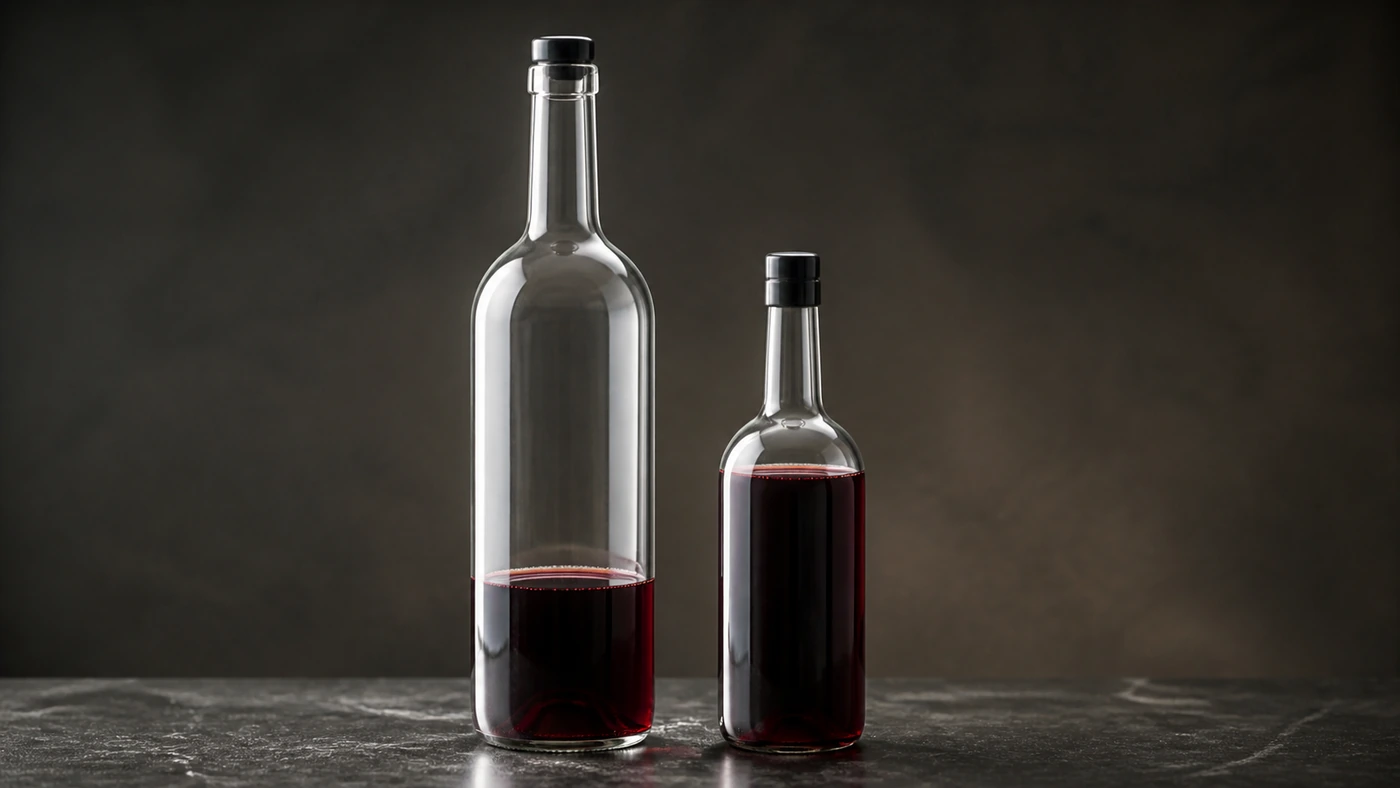
A nearly empty bottle contains a large air-to-wine ratio. Because headspace can act as an oxygen reserve, transferring the remaining wine once into a clean, dry, smaller bottle and sealing it immediately can be reasonable when you need to preserve it beyond the next day.
But transfer is not magic. Pouring also introduces oxygen. For one glass you plan to drink tomorrow, the simplest action—reseal and refrigerate—is often the better one.
5. Treat preservation gadgets as optional tools
Vacuum pumps, inert-gas systems, and displacement devices address the headspace in different ways. Their real performance depends on the device, seal, technique, wine, and time horizon.
None of them changes the first rule:
For ordinary home use, preservation devices should complement—not replace—cold storage.
How long will opened wine last?
The honest answer is not a single number.
An opened bottle does not cross from “good” to “bad” at midnight on day three. It follows a quality curve whose shape depends on:
- the wine’s initial condition;
- oxygen exposure before and after opening;
- the amount of wine remaining;
- acidity, phenolics, alcohol, sugar, and sulfur dioxide;
- closure quality;
- storage temperature;
- how often the bottle is reopened;
- and what the drinker considers enjoyable.
A delicate aromatic white may lose definition before a structured red becomes unpleasant. A young tannic wine may seem more harmonious on the second day. A mature bottle may fade within hours. A sweet or fortified style can follow another trajectory entirely.
For home use, “within the next few days” is a useful planning horizon for many opened still wines, not a universal expiration date.
Check the wine instead of obeying the calendar.
Ask Sommelier AI’s practical quality check
Before pouring a full glass, taste a small amount and ask:
- Is the aroma still clear? Or has the fruit become vague, flat, bruised, or dominated by an unfamiliar note?
- Is the balance still intact? Does acidity now feel exposed because aroma and fruit have receded?
- Has the texture changed? Is the finish unexpectedly bitter, thin, coarse, or dull?
- Is this evolution appropriate to the style? Nutty and oxidative notes may be beautiful in some wines and deterioration in others.
- Do I still enjoy it? Preservation is not a laboratory contest. The practical endpoint is sensory value.
This is a quality assessment, not a universal food-safety test. Discard wine showing mold, obvious contamination, a damaged closure, or unexpected active refermentation. Low- and no-alcohol wines require particular attention to label instructions because removing ethanol changes the product’s microbiological protections.
Different wines, different preservation problems
Sparkling wine: pressure is part of the wine
For sparkling wine, preservation means retaining both aroma and dissolved carbon dioxide.
Keep the bottle cold and use a stopper designed to withstand sparkling-wine pressure. Carbon dioxide continuously seeks equilibrium between wine, headspace, closure, and atmosphere, and research on bottle aging shows that temperature and closure properties influence CO₂ loss (Liger-Belair & Villaume, 2011; Crouvisier-Urion et al., 2021).
A decorative spoon in the neck does not create a pressure seal.
A proper stopper does.
Aromatic whites and rosés: freshness can fade before structure fails
Sauvignon Blanc, Muscat, young Riesling, rosé, and other aroma-driven wines may remain drinkable while losing the high notes that made them distinctive. Judge not only whether the wine is technically acceptable, but whether its aromatic identity remains present.
Mature wines: less margin for intervention
A mature wine may already contain delicate tertiary aromas and limited remaining fruit. Once opened, it can move rapidly. Refrigeration still slows change, but no device can restore an aroma that has already disappeared.
Sweet and fortified wines: often more resilient, never universal
Sugar, alcohol, acidity, oxidative production style, and initial composition can extend sensory stability, but the category is too diverse for one rule. Fino Sherry, Vintage Port, Madeira, Sauternes, and a sweet low-alcohol wine should not be given the same post-opening expectation simply because all can be described as “specialty wine.”
Low- and no-alcohol wine: follow the label
A 2026 study of dealcoholized wine emphasizes that reduced ethanol and residual sugar can create microbiological challenges that differ from conventional wine; stability depended on preservative levels and controlled conditions in the wine tested (Tarasov et al., 2026).
Refrigerate promptly, reseal carefully, and follow the producer’s stated consumption window.
What about an unopened bottle?
Now we return to the third clock.
A sealed bottle placed in a kitchen refrigerator for dinner this weekend is not being ruined.
Research comparing rapid cooling in an ice-water-salt bath with slower refrigerator cooling found no perceivable sensory difference among six wines, including sparkling, white, and red styles (Tarasov et al., 2020). The common fear of “cooling shock” from chilling a bottle quickly was not supported in that experiment.
An unopened bottle can therefore spend hours, days, or a practical short interval in the refrigerator without becoming a casualty of cold.
Long-term cellaring is a different goal.
A food refrigerator is designed to keep perishables at or below 40°F / 4°C under U.S. FDA guidance (FDA, Are You Storing Food Safely?). Wine-aging studies commonly use much warmer controlled conditions in the low-to-mid teens Celsius; comparisons at 15°C versus 25°C show that temperature materially changes the pace and direction of bottle evolution (Giuffrida de Esteban et al., 2019; Tarasov et al., 2021).
A kitchen refrigerator is therefore colder than a typical maturation environment. It also was not designed to manage wine-specific goals such as stable long-term development, closure performance, bottle organization, and protection from repeated household disturbance.
The problem is not that one week of refrigeration destroys a bottle.
The problem is that a regular refrigerator is an awkward place to ask a wine to age for years.
The cork question is more nuanced than the folklore
A familiar warning says that an upright bottle will dry its cork, admit air, and ruin the wine.
For a few days or weeks in the refrigerator, that claim is too dramatic.
Controlled research has found that, for most closures tested, oxygen ingress was independent of upright versus horizontal position during at least the first 24 months, while closure type mattered substantially (Lopes et al., 2006). A 2023 study of microagglomerated cork systems likewise found no significant effect of vertical versus horizontal position on oxygen transfer at 20°C over 24 months, although high temperatures eventually increased transfer at the glass–cork interface (Chanut et al., 2023).
Other work has reported composition differences related to orientation and cellar conditions in a specific Vintage Port sealed with natural cork after 44 months (Azevedo et al., 2022).
The responsible conclusion is not “orientation never matters” or “every cork must touch wine immediately.”
It is this:
Closure type, wine style, temperature, humidity, time, and bottle system interact. Short-term upright refrigeration is not an emergency; long-term natural-cork aging deserves purpose-built, stable storage.
After opening, store the bottle upright so the closure remains secure and the wine does not leak.
Light and vibration: real variables, often exaggerated
Light can alter wine chemistry, particularly in susceptible white wines and light-transmitting bottles. A 2024 Chardonnay study found that light exposure depleted protective copper fractions far more rapidly under certain oxygen conditions, while brown glass substantially slowed that loss compared with clear glass (Vongluanngam et al., 2024).
A closed refrigerator is dark most of the time, which is favorable.
Vibration is more difficult to summarize. In a one-year Pinot Noir experiment, low-energy microvibration treatments produced limited chemical differences, while storage time exerted a much larger effect; sensory results were not a simple story of vibration equaling damage (Poggesi et al., 2022).
For the household reader, the practical hierarchy remains clear:
- Avoid sustained heat.
- Limit oxygen after opening.
- Protect bottles from strong light.
- Prefer stable, purpose-built conditions for long aging.
- Do not let fear of ordinary refrigerator vibration distract from the variables that matter more.
Those crystals are probably not broken glass
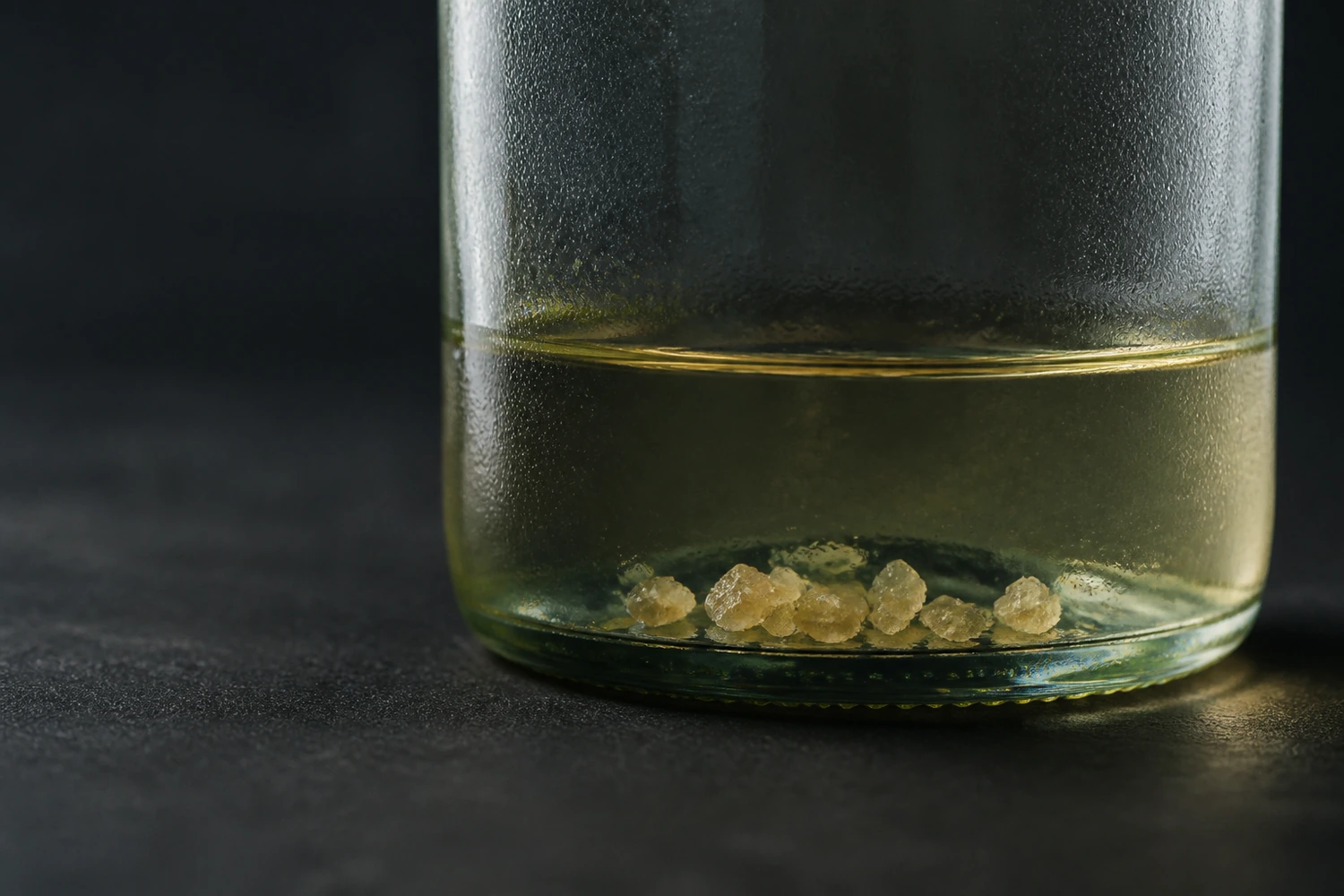
Very cold storage can reveal another surprise: crystalline deposits on the cork or at the bottom of the bottle.
They are often tartrates—commonly potassium bitartrate—formed when naturally occurring tartaric acid and potassium crystallize under cold conditions. Wineries can deliberately chill wine to encourage these crystals to precipitate before bottling; the OIV recognizes cold stabilization as a treatment for promoting tartrate precipitation (OIV, Cold Stabilisation).
The Australian Wine Research Institute describes bottle tartrate deposits as an aesthetic issue with no detrimental effect on wine quality (AWRI, Crystalline Deposits).
Cold may make the crystals visible.
It did not turn the wine into glass.
The Three-Clock Decision
Use this Ask Sommelier AI framework whenever a bottle and a refrigerator meet.
| Situation | Clock you are managing | Best practical action | What to remember later |
|---|---|---|---|
| Open still wine for tomorrow or the next few days | Preservation | Reseal promptly, refrigerate upright, minimize reopening | Let red or fuller wine warm before judging it |
| Open sparkling wine | Preservation + pressure | Refrigerate with a pressure-rated sparkling stopper | Carbonation is part of the quality curve |
| Mostly empty open bottle | Preservation + headspace | For more than next-day use, consider one careful transfer to a smaller clean bottle | Transfer itself introduces oxygen; do not over-handle |
| Sealed bottle for an upcoming meal | Serving | Refrigeration is fine; chill quickly or slowly as needed | Adjust to serving temperature in the glass or before service |
| Sealed bottle intended for months or years | Aging | Use a cool, dark, stable wine-storage environment | A food refrigerator preserves food; it is not designed to mature wine |
| Crystals appear after chilling | Identification | Inspect calmly; decant if the texture bothers you | Tartrate crystals are generally harmless and do not indicate broken glass |
| Low- or no-alcohol wine after opening | Preservation + safety | Refrigerate immediately and follow the label | Conventional-wine assumptions may not apply |
The framework is simple because the mistake is usually simple:
We ask one temperature to solve three different problems.
Why this distinction matters to Ask Sommelier AI
A useful wine assistant should not answer How long will this bottle last? with a generic countdown.
It should ask:
- Is the bottle open or sealed?
- How much remains?
- What style is it?
- How old and fragile is it?
- How was it closed?
- When will it be served again?
- Is the goal preservation, service, or aging?
That is the difference between a rule and a decision.
Ask Sommelier AI’s Cellar and Journal experiences can become more useful when bottle status, opening date, style, and intended next use are treated as part of the recommendation—not as afterthoughts.
The refrigerator is not the recommendation.
It is one tool inside the context.
Frequently asked questions
Should red wine be refrigerated after opening?
Yes. Reseal it and refrigerate it to slow post-opening change. Before serving again, let it warm in the glass or remove it from the refrigerator early enough for its aromas and texture to become expressive.
Does putting unopened wine in the refrigerator ruin it?
Not for ordinary short-term chilling or preparation for an upcoming meal. A regular kitchen refrigerator is simply not the preferred environment for intentional aging over months or years.
How long does opened wine last in the refrigerator?
There is no universal number. Many still wines are best planned for the next few days, but age, style, remaining volume, oxygen exposure, closure, and personal preference all matter. Evaluate the wine rather than treating a calendar date as an automatic verdict.
Can I refrigerate wine and then let it warm again?
Yes. A study comparing fast and slow cooling found no detectable sensory “shock” in the wines tested. Serving temperature can change perception, but ordinary chilling and warming do not by themselves mean the wine has been damaged.
Are crystals in refrigerated wine dangerous?
Tartrate crystals are generally harmless. They may look like shards, but they are naturally occurring wine salts that can precipitate under cold conditions. Decant or filter the wine if you dislike the texture.
Should an opened bottle be stored upright or on its side?
Upright is practical after opening because it reduces leakage and keeps the closure secure. For sealed bottles intended for long aging, orientation evidence is closure- and context-dependent; use stable wine-storage conditions rather than relying on one slogan.
Tomorrow’s glass begins tonight
The half bottle is still on the counter.
The decision now looks less dramatic.
Replace the closure. Put the bottle upright in the refrigerator. Tomorrow, pour a small amount, let the wine move toward an expressive serving temperature, and taste what time has done.
Perhaps the fruit will be clearer.
Perhaps the wine will feel softer.
Perhaps it will have lost the detail you loved the night before.
The refrigerator cannot promise the same glass twice.
It can give the second glass a better chance.
References & further reading
- Giuffrida de Esteban, M. L., et al. (2019). Impact of closure type and storage temperature on chemical and sensory composition of Malbec wines during aging in bottle. Food Research International, 125, 108553.
- Tarasov, A., et al. (2021). Wine storage at cellar vs. room conditions: Changes in the aroma composition of Riesling wine. Molecules, 26, 6256.
- Vidal, J.-C., & Moutounet, M. (2006). Monitoring of oxygen in the gas and liquid phases of bottles of wine at bottling and during storage. OENO One, 40(1).
- Venturi, F., et al. (2018). Effect of different glass shapes and size on the time course of dissolved oxygen in wines during simulated tasting. Beverages, 4(1), 3.
- Lee, D.-H., Kang, B.-S., & Park, H.-J. (2011). Effect of oxygen on volatile and sensory characteristics of Cabernet Sauvignon during secondary shelf life. Journal of Agricultural and Food Chemistry, 59, 11657–11666.
- Bianchi, A., et al. (2023). Effect of different packaging strategies on the secondary shelf life of young and structured red wine. Foods, 12, 2719.
- Ross, C. F., & Weller, K. (2008). Effect of serving temperature on the sensory attributes of red and white wines. Journal of Sensory Studies, 23, 398–416.
- Ross, C. F., Weller, K. M., & Alldredge, J. R. (2012). Impact of serving temperature on sensory properties of red wine as evaluated using projective mapping. Journal of Sensory Studies, 27, 463–470.
- Tarasov, A., et al. (2020). Cooling shock for bottled wine: How dramatic is this before tasting?. Beverages, 6, 62.
- Lopes, P., Saucier, C., Teissedre, P.-L., & Glories, Y. (2006). Impact of storage position on oxygen ingress through different closures into wine bottles. Journal of Agricultural and Food Chemistry, 54, 6741–6746.
- Chanut, J., et al. (2023). The key to wine conservation lies in the glass–cork interface. PNAS Nexus, 2, pgad344.
- Azevedo, J., et al. (2022). The impact of storage conditions and bottle orientation on the evolution of phenolic and volatile compounds of Vintage Port wine. Foods, 11, 2770.
- Vongluanngam, I., et al. (2024). Impact of light on protective fractions of Cu in white wine: Influence of oxygen and bottle colour. Food Chemistry, 452, 139504.
- Poggesi, S., et al. (2022). Effects of microvibrations and their damping on the evolution of Pinot Noir wine during bottle storage. Foods, 11, 2761.
- Liger-Belair, G., & Villaume, S. (2011). Losses of dissolved CO₂ through the cork stopper during Champagne aging. Journal of Agricultural and Food Chemistry, 59, 4051–4056.
- Crouvisier-Urion, K., et al. (2021). Unravelling CO₂ transfer through cork stoppers for Champagne and sparkling wines. Food Packaging and Shelf Life, 27, 100618.
- Tarasov, A., et al. (2026). Microbiological stability of dealcoholised wines: Effect of SO₂ and sorbic acid. European Food Research and Technology, 252, 186.
- U.S. Food and Drug Administration — Are You Storing Food Safely?
- International Organisation of Vine and Wine — Cold stabilisation
- Australian Wine Research Institute — Crystalline deposits