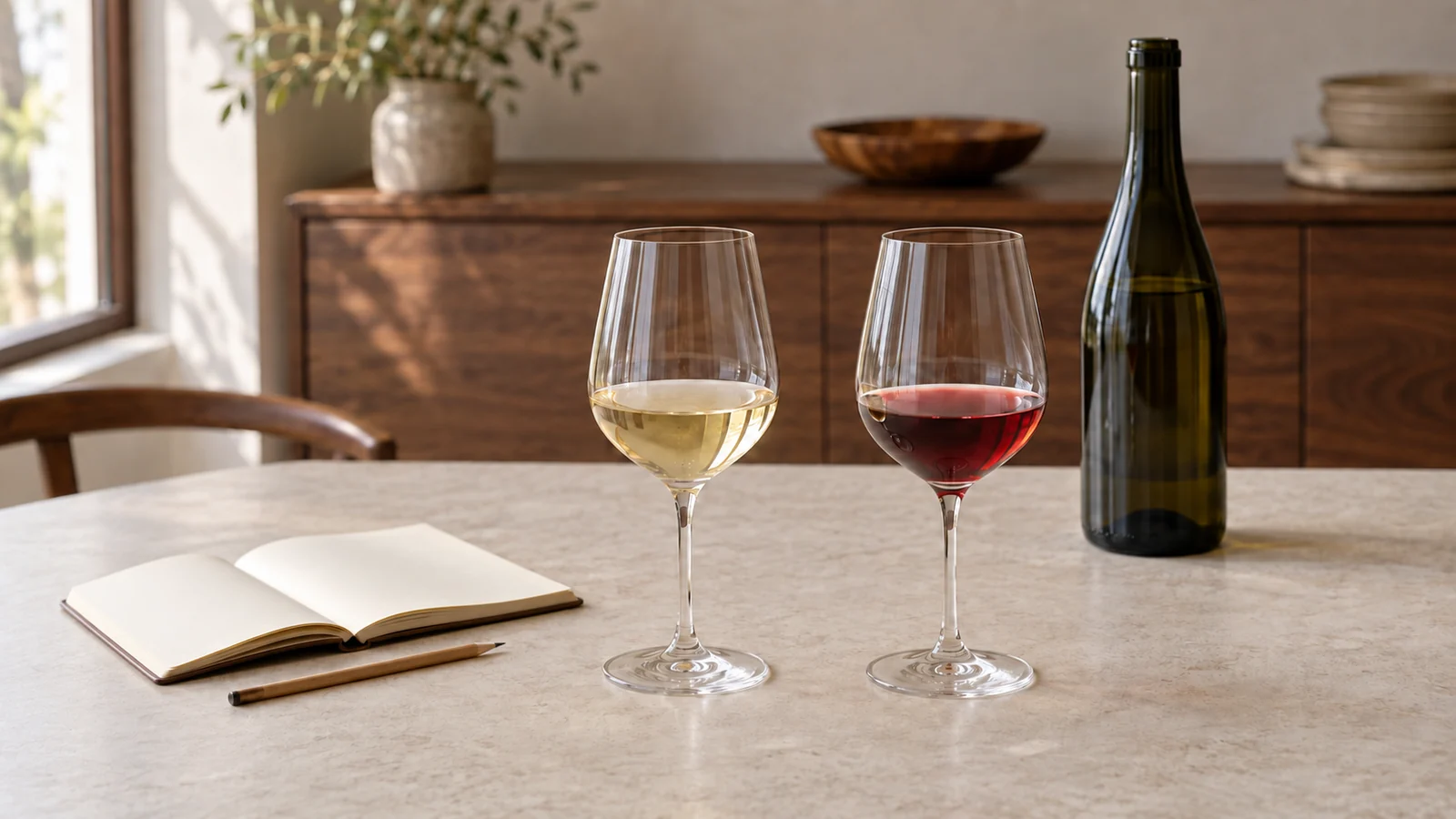
Imagine a wine list with a small heading: Natural wines.
You stop there, perhaps because you expect something fresher, less polished, more alive. Someone else skips the section for exactly the same reason. Before a bottle has been opened, the word has already created two different wines in two different minds.
Now imagine the server places a glass on the table.
It is clear, pale and quietly floral. No cloud of sediment. No dramatic aroma. Nothing announcing that it belongs to a movement.
Does that make it less natural?
Or have we confused the way a wine was made with the way we expected it to behave?
In the previous Cellar Journal article, we explored how a place-name can become a sensory expectation. Here, the name is not a place. It is a philosophy—and sometimes a defined claim under a particular set of rules.
Natural is a production philosophy, not a single flavor, a globally uniform legal category, or a guarantee of quality.
To understand a bottle, we need to move from the adjective to the decisions behind it.
What is natural wine?
In contemporary wine conversation, natural wine generally describes an approach favoring organically farmed grapes, spontaneous fermentation, limited processing, and few additions—often little or no added sulfur dioxide. Producer organizations such as Vin Méthode Nature and VinNatur turn those ambitions into their own written requirements. They do not establish one identical standard for every wine using the word.
That distinction does not make the philosophy meaningless.
It makes the next question essential:
What does this producer mean by natural, and what can be verified about this bottle?
A farming certificate, a declared fermentation method, a cuvée-specific label and an informal recommendation from a merchant are different kinds of information. Each can be useful. They should not be treated as interchangeable.
Nor should minimal intervention be read as an instruction to stop paying attention. Deciding when not to act is still a decision.
No worldwide standard does not mean no rules anywhere
The legal shorthand is especially easy to get wrong.
In France, the Vin Méthode Nature charter specifies farming requirements, hand harvesting, indigenous yeasts and restrictions on inputs and processing. It distinguishes wines without added sulfites from wines following a limited-addition route. The label is assigned to a cuvée and year through the scheme’s own declaration and control procedures; it is not a blanket certificate for everything a producer makes. Read the scheme’s charter and procedure.
VinNatur, a different producer association, describes rules covering its members’ bottled wines and checks by third-party bodies. That is another organized system—not evidence that every natural-wine claim elsewhere receives the same verification. Read VinNatur’s procedural framework.
There is also an important regulatory exception to the claim that “natural wine has no legal definition.” U.S. wine-production regulations already use natural wine as a technical term allowing specified cellar treatments. That is not a certification of the contemporary low-intervention movement. See 27 CFR §24.10.
Georgia’s June 2026 amendment to its Vine and Wine law expressly defines natural wine through cultivation and spontaneous-fermentation conditions, with restrictions on cellar practices and an allowance for sulfur dioxide. The law and the National Wine Agency’s explanation must be read in their own jurisdictional context—not exported as a universal definition. Read the enacted amendment and the agency’s explanation.
The useful conclusion is neither “anything goes” nor “one rule applies everywhere.”
Name the standard. Name the jurisdiction. Check the wine.
Organic and natural answer different questions
Organic certification is not merely a photograph of a vineyard with grass between the rows. It concerns defined production and handling requirements. Natural-wine commitments may add a particular philosophy about fermentation, additions and cellar processing, but the terms are not synonyms.
The United States provides a concrete example. USDA distinguishes organic wine, which cannot have added sulfites, from wine made with organic grapes, which may contain added sulfur dioxide under the applicable conditions and cannot use the USDA organic seal. These are regulated claims, not tasting styles. USDA Agricultural Marketing Service.
The same wording also needs geographical context. USDA explains that a wine permitted to carry an organic designation abroad may need different wording when sold in the United States. A certification does not lose its meaning when it crosses a border, but the label rules can change. USDA guidance for the U.S. organic market.
For the reader, the separation is practical: ask about farming, then ask about fermentation and cellar work. Do not assume that answering one has answered all three.
And do not infer any of them from cloudy wine, a handwritten-looking label or an illustrated animal on the bottle.
Spontaneous fermentation is not unattended fermentation
A spontaneous fermentation begins without deliberately inoculating the must with a commercial starter culture. It still involves microorganisms, changing conditions and human decisions.
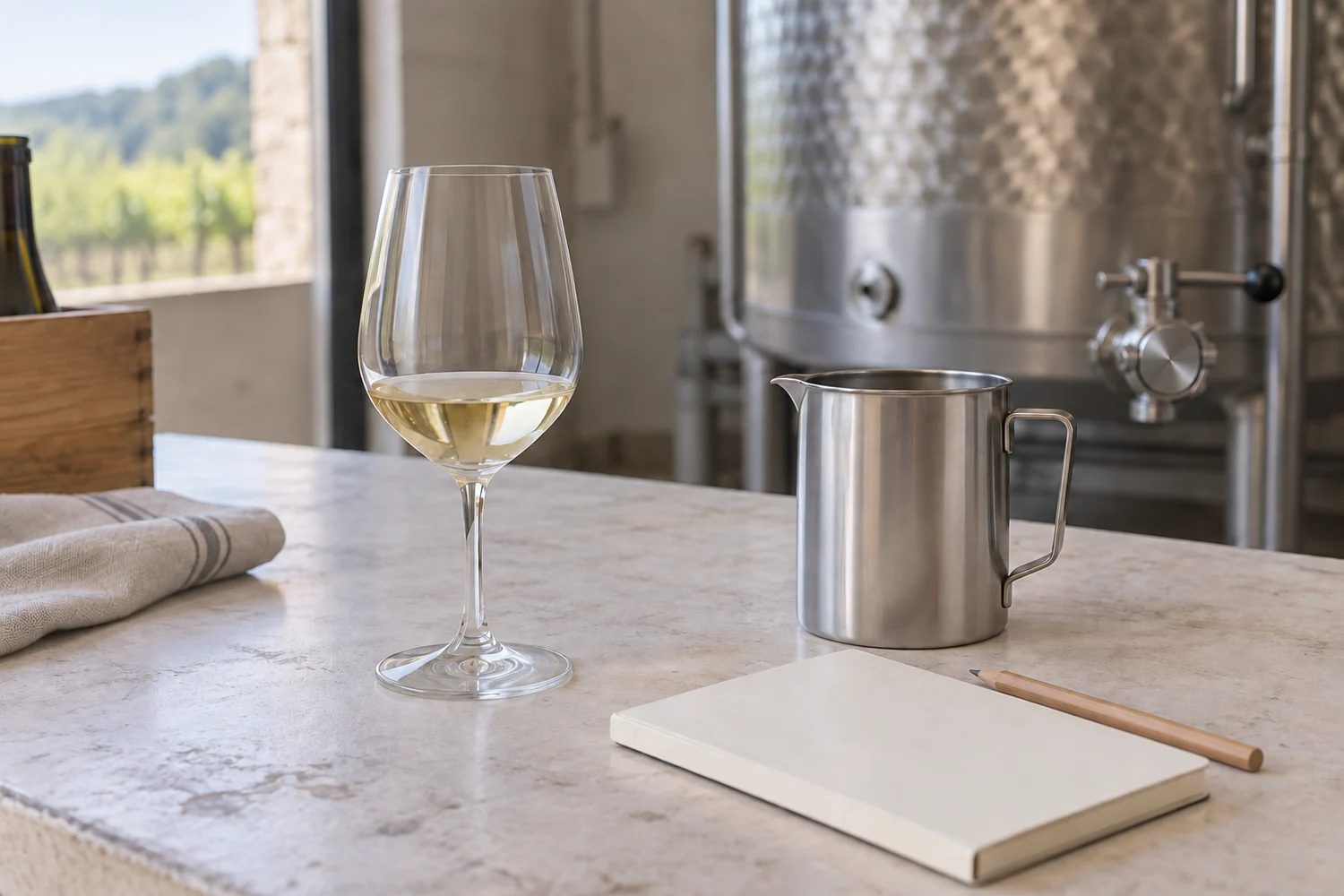
Wine Australia’s research on uninoculated fermentations describes communities that can establish themselves from grape surfaces or the winery environment. “Native” therefore should not automatically be translated as “exclusively from this vineyard,” much less as proof of a unique geographical identity. Wine Australia / Australian Wine Research Institute.
That matters because a cellar is not an empty stage. What has previously fermented there, what arrives with the fruit, and the environment created around the must belong to the question.
An original experiment comparing paired Chardonnay fermentations found differences in yeast-derived volatile compounds between inoculated and uninoculated treatments. The uninoculated wines also showed greater variability in those compounds. That supports the possibility of a different aromatic outcome—not a finding that spontaneous fermentation is universally better, more complex or more authentic. Varela and colleagues, 2009.
The skilled question is not simply, “Was yeast added?”
It is, “How did fermentation start, how was it followed, and what happened before it finished?”
Temperature monitoring, tasting and decisions about timing do not make a winemaker absent from the process. They make the process observable. Whether a particular action is allowed by a particular charter is a separate question from whether that action is technically useful.
Less intervention does not have to mean less attention.
“No added sulfites” describes an action, not a zero
Sulfur dioxide is one of the places where a small wording difference carries a large meaning.
Yeast can produce sulfur dioxide during fermentation; this has been measured in controlled wine fermentations. A statement that none was added is therefore not the same as an analytical result showing none is present. Eglinton and Henschke, 1996.
There are also several measurements behind the casual word sulfites. Total sulfur dioxide includes free and bound fractions, and pH influences the balance among the forms in the free fraction. A single total value does not describe the wine’s entire protective situation. Iowa State University Extension.
In the United States, TTB requires a sulfite declaration at 10 or more parts per million, measured as total sulfur dioxide, for wines subject to its labeling requirements. That statement tells the reader about a presence threshold; by itself, it does not disclose an addition history. TTB’s sulfite-labeling guidance.
None of this obliges a producer to add sulfur dioxide. It explains why choosing not to add it is a production choice with consequences to manage—not a claim that chemistry has been removed from the bottle.
For choosing a wine, “I prefer a verified no-added-sulfites approach” is a clear preference. “This wine must contain no sulfites” is a different claim and needs different evidence.
Some of the most important decisions are almost invisible
A list of additions cannot describe everything that happens in a cellar.
Packaging is one example. AWRI separates oxygen dissolved in the wine from oxygen in the bottle’s headspace and notes additional contributions from the closure. These are practical variables even when no flavoring or corrective ingredient has been added. AWRI’s explanation of total package oxygen.
This is why nothing added cannot tell us how carefully a bottle was protected, how it was filled or how it will develop.
It also explains why a production philosophy is not a storage instruction. Follow bottle-specific guidance rather than assigning every natural wine the same shelf life or assuming it must always be drunk immediately.
The point is not that every wine needs the same protection. It is that the word natural does not describe the full system of protection.
Cloudiness is an observation, not a certificate
A hazy appearance may fit someone’s picture of natural wine. It does not verify a farming method or a fermentation philosophy.
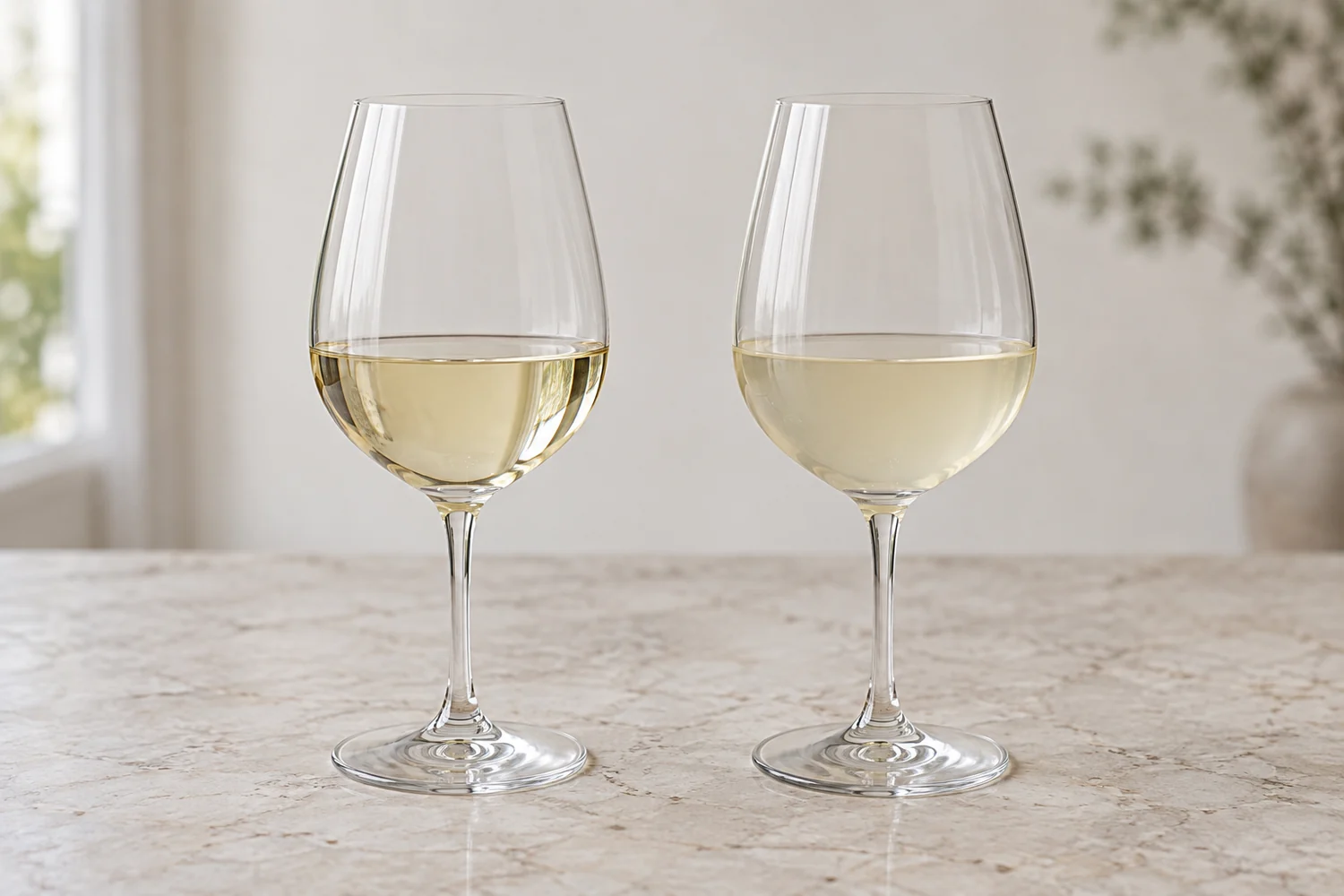
AWRI’s diagnostic resources distinguish different kinds of haze and deposit, including crystalline, amorphous and microbiological material. Identifying the cause can require more than looking at a glass. AWRI, Hazes and deposits.
That gives us two boundaries at once. Cloudiness alone does not prove a defect. Clarity alone does not certify stability.
A deposit may be acceptable within the intended presentation of a wine. An unexpected change may warrant a question to the producer or merchant. Neither should be converted into an entire biography of the wine from appearance alone.
Unfiltered is a process claim. Cloudy is an observation. Stable is a different question.
Does filtration remove a wine’s personality?
This deserves a less dramatic answer than either side of the debate sometimes offers.
AWRI’s own investigation followed four commercial red wines through different filtration stages and bottle aging. Tannin and color were unchanged; some aroma or flavor differences occurred, but no consistent filtration-related textural pattern appeared across the wines. Those results do not support a universal claim that filtration strips wine of its character. They also do not establish that every filtration method leaves every wine unchanged. AWRI’s research summary.
A producer can reject filtration on philosophical or stylistic grounds without claiming that all filtered wine is inferior. Another can choose it for a defined technical purpose without claiming that unfiltered wine is irresponsible.
The useful question is specific: what treatment, on which wine, for what reason, with what result?
That is a better conversation than treating a filter as a moral boundary.
“Funky” is not one flavor—and not a requirement
Suppose a friend says they dislike natural wine because it tastes “funky.” Ask what that means to them.
Earthy? Smoky? Vinegar-like? Yeasty? Simply unfamiliar?
Those words do not identify one mechanism. Nor does a production philosophy make every unusual impression desirable.
Brettanomyces illustrates why precision matters. AWRI describes several possible sensory effects associated with this yeast, with perception affected by wine composition; stronger expression can suppress fruit character. That is a microbiological and sensory discussion, not a certification of naturalness. AWRI’s Brettanomyces guidance.
A drinker can enjoy an unconventional wine without declaring every deviation a virtue. Another can dislike that bottle without dismissing every producer working with low intervention.
Ask what is happening in the glass, whether it belongs to the intended style, and whether you enjoy it. A label should neither excuse a problem nor create one before the wine has been tasted.
The word can also change the experience
Our earlier discussion of typicity returns here in a different form.
A 2026 wine-tasting experiment reported that the word natural could alter sensory and quality evaluations, with responses depending on wine expertise and additional information. It investigated judgments—not proof that the wine became environmentally superior, healthier or chemically different when described that way. Braut and colleagues, 2026.
This does not mean affection for natural wine is imaginary. Values, trust and pleasure legitimately belong to a choice. It means those values should not quietly become laboratory results.
A useful habit is to record two separate things: what the wine offers, and what you value about how it was made. Neither needs to erase the other.
The Six-Question Natural Wine Read
These six questions turn the discussion into something you can use at the table. This is an original Cellar Journal reading tool, not a certification or a validated laboratory protocol.
1. How were the grapes farmed?
Look for the stated practice, its geographical scope and any applicable certification. “Organic,” “grown organically” and “certified organic” do not provide identical documentation. Record what is actually declared rather than upgrading a broad claim into a verified one.
2. How did fermentation begin?
Ask whether the producer used spontaneous fermentation, an inoculated culture or another described method. Keep that answer separate from claims about where every microorganism originated and what the wine must taste like.
3. What was added or removed?
Seek a production account, not a purity slogan. Distinguish no added sulfites from measured total sulfur dioxide, and an ingredient statement from a description of every cellar operation. An unanswered question remains unanswered; it is not evidence of wrongdoing.
4. How was oxygen managed?
Ask about the vessel, transfers, maturation and bottling where that information is available. Do not infer those details from “minimal intervention.” A sensory note can suggest a question; it cannot reconstruct the cellar by itself.
5. How was the wine clarified and stabilized?
Separate settling, fining, filtration and other stated approaches rather than assuming that “unfiltered” explains all of them. Ask what appearance or deposit the producer expects and whether specific storage advice accompanies the bottle.
6. Which claim is independently verified?
Identify the certifier or scheme, the actual scope, the cuvée or vintage covered, and the difference between producer declaration, internal checks and external verification. A program’s existence is not proof that the bottle in front of you belongs to it.
You do not need to interrogate a server with all six questions. Often one does the work:
“When you call this wine natural, which farming or winemaking details do you mean?”
That is an invitation to explain the bottle—not a challenge to defend a movement.
Choose the wine, not a side
It is possible to support careful farming, admire spontaneous fermentation and still prefer a particular filtered wine. It is equally possible to love an unfiltered, low-addition bottle without needing to prove that every other approach is wrong.

For a useful recommendation, describe both your values and your palate:
“I would like a producer with documented organic farming. In the glass, I prefer fresh fruit, moderate body and little bitterness. I am open to unusual aromas, but not if they overwhelm everything else.”
That is far more informative than simply asking for “something natural.”
Ask Sommelier AI should keep those two kinds of information separate: verified production choices and the sensory style you enjoy. A missing certification or technical detail should remain missing—not become an invented fact. And a farming claim should not silently become a flavor prediction.
A production philosophy can guide your choice. It should not choose your sensations for you.
Back to the table
Return to that quiet, clear glass from the beginning.
It does not need to look rustic to deserve curiosity. Nor would a little haze automatically make it more honest. The useful story lies in the grapes, the fermentation, the decisions, the evidence—and the wine actually offered to you.
Natural wine becomes more interesting when we stop asking one adjective to do all of that work.
Ask how it was made. Notice what it gives you. Leave room for pleasure, surprise and disagreement.
The word opens the conversation. The bottle deserves the rest of it.
Next, we turn from a broad philosophy to a specific technique: contact between white-grape juice and skins. The OIV recognizes a defined category of white wine with maceration, associated with prolonged pomace contact and potentially amber color and tannic character; that category is not a certificate of natural production. OIV, Resolution ECO 647-2020.
That brings us to the next question: what does skin contact change—and why does orange wine not have just one flavor?
Questions worth asking
Is natural wine the same as organic wine?
No. Organic claims operate under specified production and certification rules; natural-wine programs or producer philosophies may impose additional or different commitments. Confirm the wording, jurisdiction and actual scheme rather than treating them as synonyms. Vin Méthode Nature; USDA.
Can natural wine contain sulfites?
Yes. No-added-sulfites production does not establish zero sulfur dioxide, and some natural-wine schemes provide a limited-addition route. The bottle’s precise claim matters. Charter; fermentation research.
Does natural wine have to be cloudy or funky?
Neither appearance nor an informal aroma word verifies how a wine was produced. Haze has different possible causes, and unusual aromas need to be evaluated in context. AWRI on haze; AWRI on Brettanomyces.
Is natural wine healthier or hangover-free?
The word establishes neither claim. Wine containing alcohol still carries alcohol-related risks; production philosophy does not remove ethanol. Do not use the label as medical advice, allergy clearance or a promise about how you will feel afterward. World Health Organization; TTB on sulfite disclosure.
Can a natural wine age?
The category name alone cannot answer. Ask for guidance on the particular wine, vintage and storage conditions. Oxygen at packaging and contributions from the closure are among the variables affecting the bottle; “natural” is not a universal drinking window. AWRI on packaging oxygen.
Does choosing natural wine mean rejecting science?
Not necessarily. A producer can choose a restrained production philosophy and still measure, observe and investigate. Written programs themselves use rules and controls. The meaningful question is how the approach is documented and managed, not whether a slogan sounds traditional or technical. Vin Méthode Nature; VinNatur.
References and further reading
Information and regulatory examples were checked on 11 September 2026. Program requirements and legal rules can change. The U.S. and Georgian examples apply within their own contexts; this article is educational, not a compliance opinion for a producer or importer.
- Vin Méthode Nature / Syndicat de défense des vins naturels. (n.d.). Le label — Charte d’engagement et procédure. Direct source.
- VinNatur. (n.d.). Procedural Regulations. Direct source.
- U.S. Department of the Treasury / TTB; eCFR. (version consulted in 2026). 27 CFR §24.10 — Meaning of terms. Direct source.
- Parliament of Georgia / Legislative Herald of Georgia (Matsne). (2026). **Amendment to the Law of Georgia on Vine and Wine, 9 June 2026, No. 1643 [Georgian original].** Direct source.
- National Wine Agency of Georgia. (11 June 2026). All Wines Intended for Commercial Production, Except Natural Wine, Will Be Subject to Mandatory Tasting. Direct source.
- USDA Agricultural Marketing Service. (n.d.). Organic Alcohol. Direct source.
- USDA Agricultural Marketing Service. (n.d.). Labeling Requirements for the U.S. Organic Market. Direct source.
- Wine Australia / Australian Wine Research Institute. (project completed in 2022). Bioprospecting Australian microbial genetic diversity — project AWRI 1701-4.4.3. Direct source.
- Varela, C., et al.. (2009). Discovering a chemical basis for differentiating wines made by fermentation with “wild” indigenous and inoculated yeasts: role of yeast volatile compounds. Australian Journal of Grape and Wine Research. Direct source.
- Eglinton, J. M., & Henschke, P. A.. (1996). Saccharomyces cerevisiae strains AWRI 838, Lalvin EC1118 and Maurivin PDM do not produce excessive sulfur dioxide in white wine fermentations. Australian Journal of Grape and Wine Research. Direct source.
- Savits, J. / Iowa State University Extension and Outreach. (26 April 2019). Sulfur Dioxide Measurement and Overestimation in Red Wine. Direct source.
- Alcohol and Tobacco Tax and Trade Bureau (TTB). (guidance consulted in 2026). Wine Labeling: Declaration of Sulfites. Direct source.
- Australian Wine Research Institute. (n.d.). Oxygen pick-up during packaging — understanding total package oxygen. Direct source.
- Australian Wine Research Institute. (n.d.). Hazes and deposits. Direct source.
- Australian Wine Research Institute. (n.d.; includes research by McRae et al. (2017)). Filtration — physical removal of microorganisms. Direct source.
- Australian Wine Research Institute. (n.d.). Brettanomyces — frequently asked questions. Direct source.
- Braut, B., Paissoni, M. A., Cavalletti, B., Río Segade, S., Corsi, M., & Rolle, L.. (2026). Naturally biased? Experimental evidence on how the term natural influences wine consumers’ perceptions and preferences. Journal of Behavioral and Experimental Economics, 121, 102527. Direct source. Publisher abstract.
- World Health Organization. (2024; page consulted in 2026). Alcohol. Direct source.
- International Organisation of Vine and Wine. (2020). White wine with maceration — Resolution OIV-ECO 647-2020. Direct source.