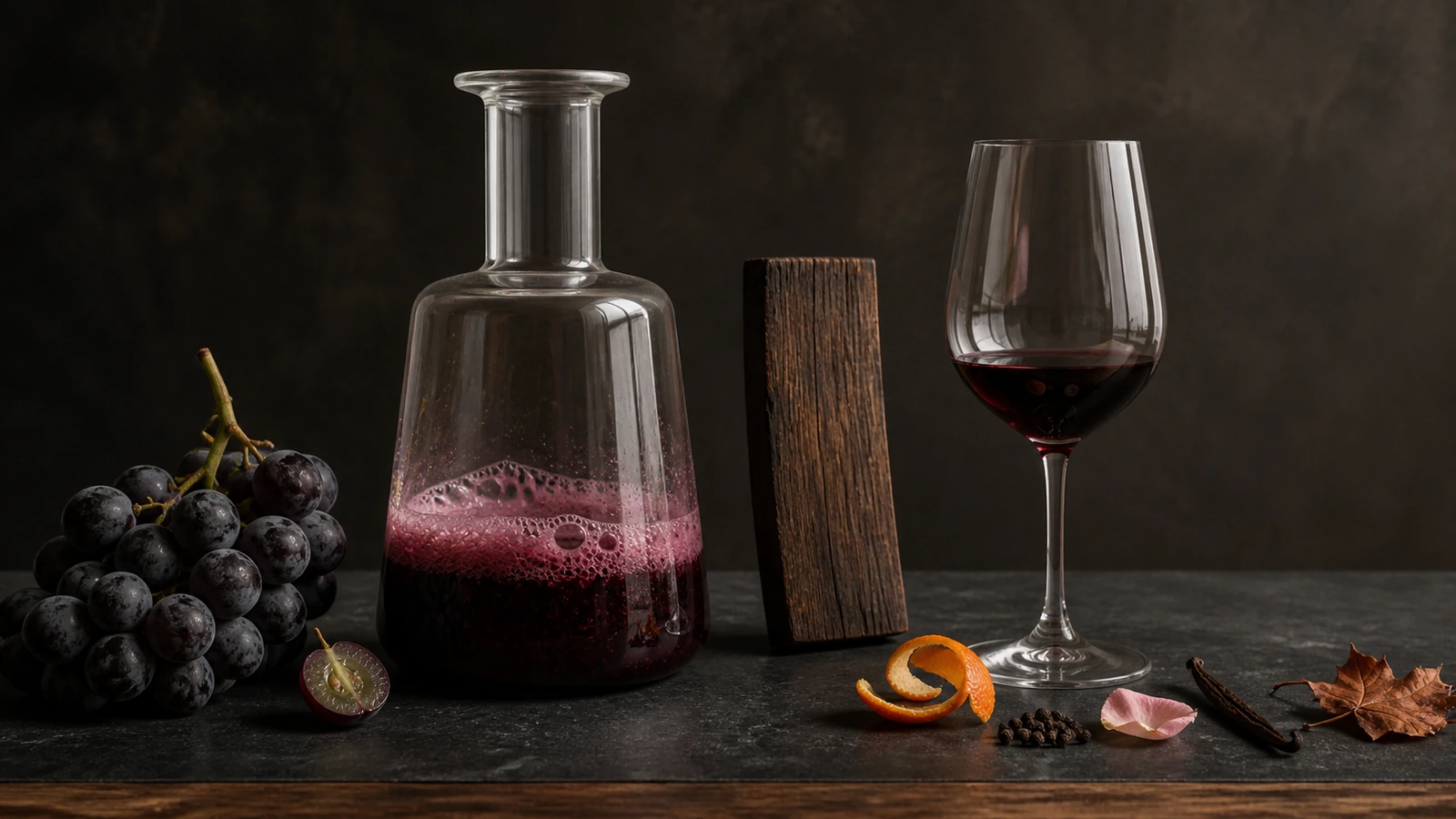
Lift four glasses to your nose.
A Sauvignon Blanc may suggest grapefruit, passion fruit, or guava. A cool-climate Syrah may carry a line of black pepper. A Chardonnay may recall butter, toast, and vanilla. An older red may move away from fresh fruit toward dried leaves, tobacco, leather, or earth.
None of those objects needed to enter the winery.
No grapefruit was squeezed into the tank. No peppercorns were crushed with the grapes. No vanilla pod was hidden inside the barrel.
So how did those aromas reach the glass?
In our previous Cellar Journal article, we explored why a wine aroma can feel completely familiar yet resist a name. This time, we follow the aroma in the opposite direction—not from nose to language, but from grape to glass.
The central idea: wine aroma is assembled, not inherited whole. The grape supplies some odorants and many silent precursors; microorganisms release and create others; oak and oxygen add or transform signals; time rearranges their balance; and the wine itself influences what finally reaches your nose.
A wine does not smell like an ingredient list
The first mistake is to imagine every descriptor as a hidden ingredient.
Wine aroma depends largely on volatile compounds—molecules capable of moving from liquid into the air above the glass and reaching the olfactory system. But chemical presence alone does not guarantee sensory impact.
A compound must be present at a relevant concentration. Its detection threshold can change with the wine. Ethanol, sugar, glycerol, phenolic compounds, and other components can influence how volatile molecules partition into the headspace above the liquid (Robinson et al., 2009).
Compounds also interact. One may reinforce, suppress, or reshape the way another is perceived. Research using wine matrices has shown that mixtures can produce sensory effects that are not predictable from each component in isolation (McKay et al., 2020).
That distinction matters.
The useful model is not:
one molecule → one perfect aroma word
It is closer to:
many compounds + wine matrix + concentration + temperature + air + individual sensitivity → an evolving sensory impression
A descriptor such as blackberry, toast, or leather is therefore a clue about perception. By itself, it is not proof of one molecule, one technique, or one stage of production.
The grape arrives with two aromatic inventories
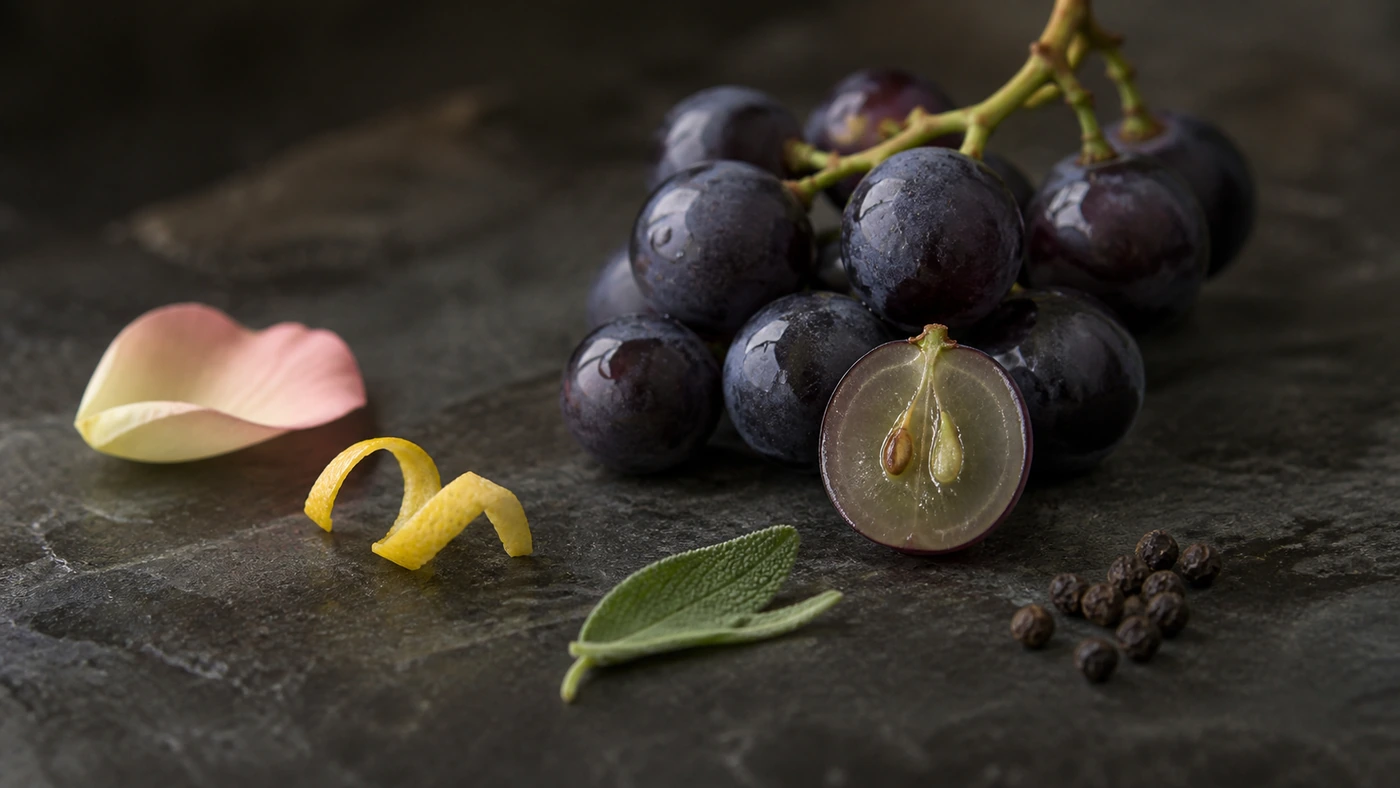
The grape contributes far more than sweetness and acidity.
A useful scientific distinction separates the grape’s actual aroma from its potential aroma. The first includes odor-active compounds already present in volatile form. The second includes compounds that may be odorless, weakly aromatic, or chemically bound until fermentation, aging, or even conditions in the mouth release or transform them (Ferreira & López, 2019; Parker et al., 2018).
In other words, a berry can carry both a visible score and music that has not yet been played.
Some aromas are already written into the berry
Certain grape-derived compounds can make a recognizable contribution before fermentation has done most of its work.
Monoterpenes—including compounds such as linalool and geraniol—are especially important in aromatic varieties and can contribute floral and citrus impressions. In grapes, terpenoids may occur both as free volatile compounds and in nonvolatile forms bound to sugars (Black et al., 2015).
Rotundone offers an unusually vivid example. Researchers identified it as a major contributor to the black-pepper character associated with some Syrah/Shiraz grapes and wines (Wood et al., 2008). The wine does not smell peppery because pepper was added. A grape-derived sesquiterpene can create a closely related sensory signal.
Methoxypyrazines provide another example. Compounds such as 2-methoxy-3-isobutylpyrazine can contribute green-pepper or herbaceous impressions in certain grape varieties, and their accumulation can depend partly on genotype and vineyard conditions (Koch et al., 2010).
These are genuine grape-origin signals—but even here, what the drinker perceives depends on concentration, the rest of the wine, and individual sensitivity.
Other aromas arrive in silence
Some of wine’s most recognizable aromas begin as precursors that do not smell like the final wine.
Sauvignon Blanc is the classic example. Several compounds associated with passion fruit, grapefruit, guava, or boxwood can be released during fermentation from nonvolatile precursors present in grape juice. Research has directly demonstrated yeast enzymes capable of releasing these aroma-active thiols (Holt et al., 2011).
The grape supplies potential. The yeast helps make part of that potential perceptible.
A similar principle applies to glycosidically bound aroma precursors. The aromatic portion of the molecule may remain attached to sugar and therefore contribute little or nothing directly to aroma until chemical or enzymatic reactions release it (Parker et al., 2018).
This is why the familiar categories primary, secondary, and tertiary aroma are useful for teaching but imperfect as hard chemical borders. A descriptor that seems “varietal” may require microbial action to become volatile. A compound originating in the grape may become sensorially important only during fermentation or bottle aging.
Wine aroma often has shared authorship.
The vineyard writes the first draft, not the final manuscript
Variety matters, but a grape variety is not an aromatic script that repeats itself unchanged.
Genetics influence which compounds and precursors a vine can produce. Vineyard conditions influence how much accumulates, survives, or changes before harvest. Ripeness, sunlight exposure, water status, canopy architecture, temperature, disease pressure, and the inclusion of stems or rachis can all alter the material that reaches the winery (Robinson et al., 2014).
Research on Cabernet Sauvignon, for example, has examined how vine training, sunlight exposure, and ripening affect methoxypyrazines in grapes, must, and wine (Sala et al., 2004). More recent work has shown that rachis tissue can contribute methoxypyrazines and green sensory character in a context where the berries themselves were not the detected source (Capone et al., 2022).
The careful conclusion is not that one vineyard practice always creates one aroma.
It is that the vineyard defines a field of possibilities.
The winery receives fruit with a particular mixture of volatile compounds, precursors, acids, sugars, nutrients, phenolics, microorganisms, and physical tissues. Fermentation will not begin from a blank page—but neither will it merely photocopy the fruit.
Yeast is not a courier. It is a workshop
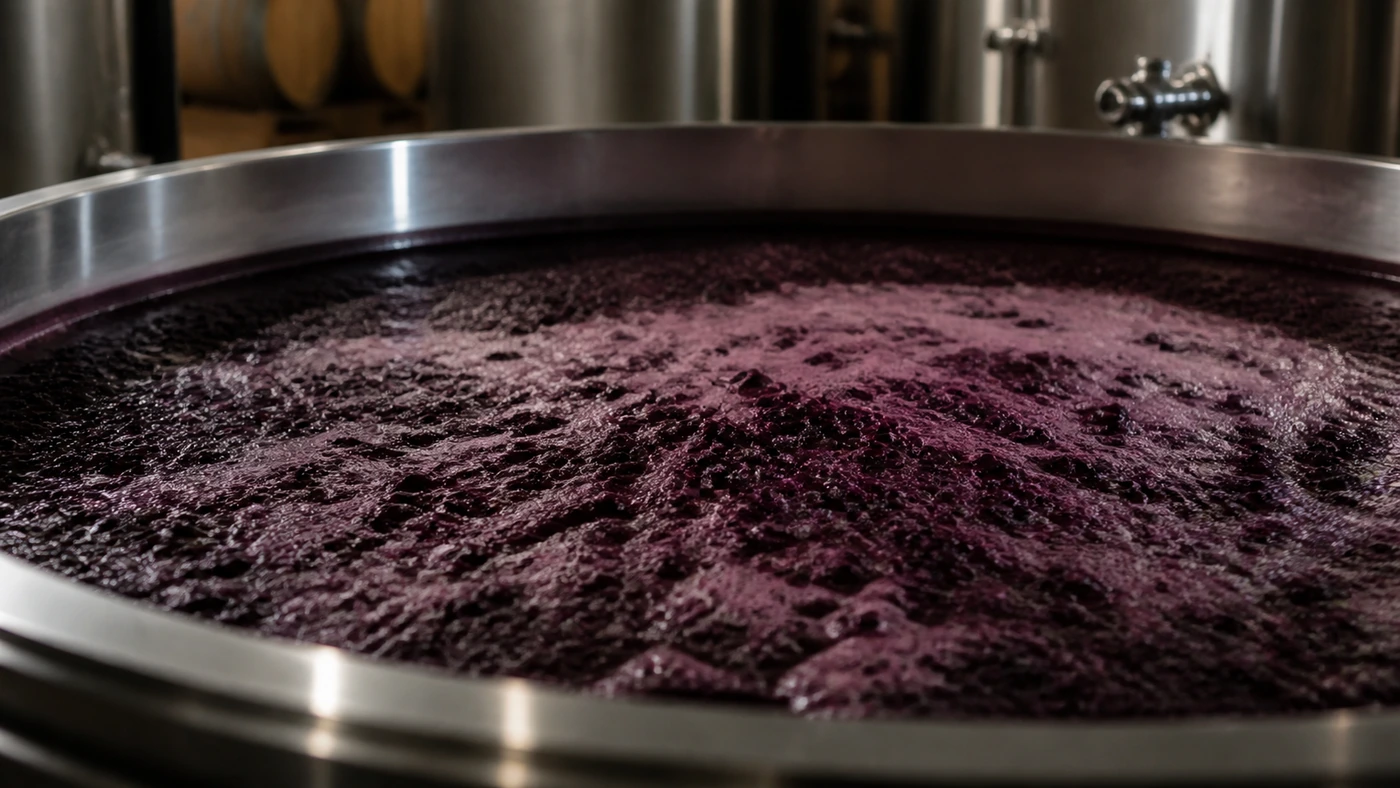
Yeast is often described as if it simply carries grape aroma from juice into wine.
That is far too passive.
During alcoholic fermentation, yeast converts sugar into ethanol and carbon dioxide, but it also produces or modifies many aroma-relevant compounds, including esters, higher alcohols, carbonyl compounds, volatile fatty acids, and sulfur-containing compounds. Yeast and bacteria can also release grape-derived aroma compounds from nonvolatile precursors (Swiegers et al., 2005).
This is one reason freshly fermented wines can smell vividly fruity even when the grape juice itself did not smell the same way.
Many esters formed during fermentation can contribute impressions such as banana, pear, apple, pineapple, or generalized youthful fruit. Their final expression depends on more than the name of the yeast. Strain, temperature, nutrient availability, oxygen exposure, juice composition, and fermentation management can all alter the profile.
Even within Sauvignon Blanc, commercial yeast strains can differ in their ability to release volatile thiols from grape precursors, and fermentation temperature can matter (Howell et al., 2004).
The better description is transformation, not delivery.
The grape sets conditions. Yeast interprets and rewrites them.
Malolactic fermentation can redraw the style
After alcoholic fermentation, many wines undergo malolactic fermentation, usually driven by lactic acid bacteria such as Oenococcus oeni.
At its simplest, the process converts sharper malic acid into softer lactic acid. But its sensory consequences can extend beyond acidity.
Diacetyl—a compound associated with butter, butterscotch, or nuttiness—can arise through bacterial metabolism during and after malolactic fermentation. Its final concentration depends on factors including oxygen, redox conditions, sulfur dioxide, and microbial metabolism (Nielsen & Richelieu, 1999).
That does not mean every wine that completes malolactic fermentation tastes buttery.
Nor does a buttery aroma prove that a wine was aged in oak.
Diacetyl can be obvious, integrated, masked, reduced, or below perception depending on concentration and matrix. A winemaker can encourage a rounder, more textural style without creating a glass that smells like melted butter.
The production step and the descriptor are related—but they are not interchangeable.
Oak contributes more than vanilla—and less certainty than people assume
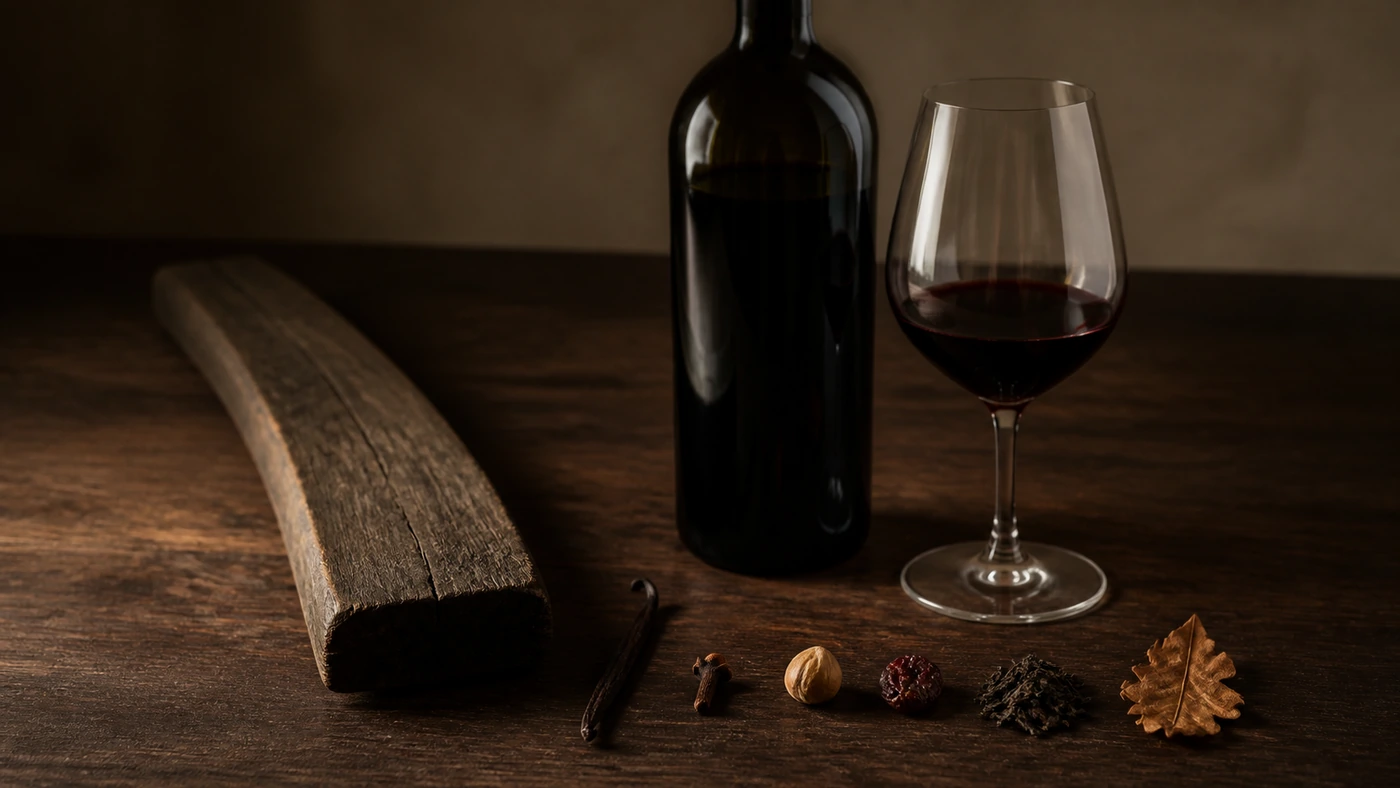
Oak can contribute a recognizable family of aromas: vanilla, coconut, clove, toast, smoke, sweet spice, wood, coffee, or caramel-like impressions.
These associations arise from multiple compounds extracted from or formed through the seasoning and toasting of oak, including oak lactones, vanillin, eugenol, guaiacol, and furfural-related compounds. Studies of barrel-matured Chardonnay and Cabernet Sauvignon have linked oak-derived volatile composition with sensory characteristics, while also showing that the relationships depend on the wine and the combination of compounds present (Spillman et al., 2004).
But “vanilla” is not a forensic report.
From a tasting note alone, you usually cannot identify with certainty:
- the exact oak species
- the forest of origin
- the toast level
- whether the wine used barrels, staves, chips, or another permitted oak format
- the age of the vessel
- the duration of contact
Oak origin, seasoning, coopering, vessel size, toast, reuse, contact time, oxygen exposure, and the wine’s own matrix can all affect the result.
A descriptor may support a plausible production hypothesis. It rarely proves the full production history by itself.
Lees can influence aroma—but “brioche” is not a stopwatch
Traditional-method sparkling wines are often described with bread, pastry, toast, yeast, nut, or brioche notes. These are commonly connected to secondary fermentation and aging on lees—the spent yeast material left in contact with the wine.
That connection is reasonable, but it can become too simple.
A 2022 study separated the effects of wine aging, lees contact, and secondary fermentation over 24 months. Time strongly influenced the evolution of fermentation-derived and oxidation-associated compounds, while the contribution attributed specifically to yeast autolysis was less dominant than expected during the period studied (Sawyer et al., 2022).
The lesson is not that lees do nothing.
It is that brioche does not function as a precise clock. A mature sparkling-wine aroma may reflect the base wine, secondary fermentation, lees, oxygen management, declining fruity esters, newly perceptible aldehydes, and time acting together.
Once again, the descriptor has more than one possible author.
The bottle does not sleep
A sealed bottle can look motionless while its chemistry continues to evolve.
During aging, some youthful compounds decline. Others are released from precursors, transformed, masked, unmasked, oxidized, reduced, or rearranged through slow reactions. The amount of oxygen present at bottling and transmitted through the closure can materially influence aroma evolution (Ugliano, 2013).
This helps explain why a wine may move from:
- fresh fruit toward dried or preserved fruit
- bright floral notes toward honeyed or tea-like impressions
- simple fermentation fruit toward nutty, savory, earthy, or tobacco-like complexity
The educational term tertiary aroma is useful here, but it should not suggest that aging adds one fixed catalog of scents to every wine.
Different wines age along different chemical paths. Closure, temperature, oxygen, pH, sulfur dioxide, phenolic structure, initial aroma composition, and storage history all matter.
And age is not automatically quality.
A wine can evolve beautifully, remain closed, lose fruit, become oxidized, develop reduction-related odors, or simply move beyond the balance a particular drinker enjoys.
Some aromas are style. Others are warning signs
The same sensory family can be welcome at one level and distracting at another.
A faint smoky note may add complexity. A dominant burnt or medicinal character may obscure the wine. A trace of volatile acidity may lift fruit; too much can smell sharply of vinegar or solvent. A low sulfur note may disappear with air; an intense hydrogen-sulfide or mercaptan character can dominate the glass.
The Australian Wine Research Institute documents common wine faults and emphasizes that perception thresholds depend on both the individual and the style or structure of the wine (AWRI, Wine flavours, faults and taints).
Brettanomyces provides a useful example. Associated compounds can produce medicinal, Band-Aid-like, smoky, spicy, or horsey impressions. Some drinkers historically accepted low-level rustic character in certain styles; at higher expression, fruit and regional detail can be suppressed. AWRI notes that the sensory threshold of key Brett-associated compounds changes with wine style and matrix (AWRI, Brettanomyces FAQ).
The useful question is not simply:
Is this compound good or bad?
Ask instead:
What is this impression doing in this wine, at this intensity, and to the wine’s balance?
No aroma has a single author
Return to the glasses from the beginning.
The grapefruit or passion-fruit character in Sauvignon Blanc may depend on odorless grape precursors, yeast genetics, fermentation conditions, other fruity compounds, and the matrix that carries them.
The black pepper in Syrah can have a strong grape-derived connection through rotundone, while climate, vineyard site, ripeness, and individual sensitivity influence how clearly it appears.
The butter in Chardonnay may point toward diacetyl associated with malolactic fermentation—not automatically oak.
The vanilla and toast may plausibly involve oak, but the descriptor alone cannot reconstruct the barrel program.
The dried fruit, tobacco, or earthy complexity of an older red can emerge from a long sequence of chemical changes rather than one “aging molecule.”
The aromas are real.
The simple origin stories are usually not.
| What you notice | Plausible contributors | What it does not prove by itself |
|---|---|---|
| Floral or citrus notes | Free grape terpenes, bound precursors, fermentation, compound interactions | That flowers or citrus were added |
| Passion fruit, guava, grapefruit | Grape-derived thiol precursors, yeast release, fermentation esters, matrix effects | That the aroma belongs entirely to the grape or entirely to the yeast |
| Green pepper or leafy herbs | Methoxypyrazines from berries or other grape tissues, ripeness, extraction, masking or enhancement by other volatiles | That the wine is automatically faulty or that the grapes were simply “unripe” |
| Black pepper | Rotundone and the surrounding aroma matrix | That spice was added |
| Banana, pear, apple, youthful fruit | Fermentation-derived esters plus grape and microbial compounds | That one ester explains the complete fruit profile |
| Butter or butterscotch | Diacetyl and malolactic metabolism, modified by matrix and cellar conditions | That the wine must have seen oak |
| Vanilla, coconut, clove, toast | Oak-derived compounds, toast chemistry, extraction, oxygen, and interactions | The exact forest, toast level, vessel, or aging duration |
| Bread, brioche, nuts, honey | Base-wine composition, secondary fermentation, lees contact, aging, oxidation-reduction chemistry | An exact number of months on lees |
| Dried fruit, tobacco, savory earth | Aging reactions, changing ester balance, precursor release, oxygen exposure, sulfur and aldehyde chemistry | That an older wine is necessarily better |
How to think about origin while tasting
You do not need a laboratory to reason more carefully about aroma. You need better questions.
1. Begin with the sensory family
Is the impression primarily fruity, floral, herbal, spicy, woody, fermentative, earthy, sulfurous, or oxidative?
2. Ask whether it fits the wine’s plausible history
A peppery Syrah, floral Muscat, buttery Chardonnay, or oak-marked Rioja each has plausible pathways—but familiarity is not proof.
3. Observe what changes with air and temperature
A volatile sulfur note may diminish. Oak may become more integrated. Fruit may seem fresher as a chilled wine warms, then heavier if it becomes too warm. Change is part of the evidence.
4. Decide whether the aroma is integrated or dominant
A compound can contribute complexity below the point where it becomes obvious as a named object.
5. Separate perception from production inference
Write “vanilla and toast” before writing “new French oak.” The first is an observation. The second is a hypothesis.
6. Keep at least one alternative explanation
Butter may suggest diacetyl, but perception depends on concentration and matrix. Green character may involve methoxypyrazines, stems, herbs, or interactions. A mature nutty note may reflect aging rather than lees alone.
This discipline does not make tasting less poetic.
It makes the poetry accountable.
From a list of smells to the history of the wine
Aroma begins before the grape is harvested and continues after the bottle is sealed.
The vine determines genetic possibilities. The season and vineyard shape the raw material. Harvest and processing decide what enters the must. Yeast creates and unlocks compounds. Bacteria may soften acidity and alter aroma. Oak can contribute and transform signals. Lees and oxygen influence development. Time changes the balance. The glass, temperature, and drinker complete the experience.
Ask Sommelier AI approaches tasting notes in that same spirit: not as a contest to name the most objects, but as an attempt to explain what is plausible, what is uncertain, and what the wine may be telling you about its style.
The next time a glass suggests grapefruit, pepper, vanilla, or leather, ask two questions:
What does this smell like?
Then:
What had to happen for the wine to smell this way?
The first question gives you a descriptor.
The second begins to tell you the story of the wine.
In the next Cellar Journal article, we will follow one of wine’s most seductive—and disputed—descriptors: minerality. Is it stone, salt, acidity, sulfur chemistry, texture, metaphor, or some combination of them?
References & further reading
- Ferreira, V., & López, R. (2019). The Actual and Potential Aroma of Winemaking Grapes. Biomolecules, 9(12), 818. https://doi.org/10.3390/biom9120818
- Parker, M., Capone, D. L., Francis, I. L., & Herderich, M. J. (2018). Aroma Precursors in Grapes and Wine: Flavor Release during Wine Production and Consumption. Journal of Agricultural and Food Chemistry, 66(10), 2281–2286. https://doi.org/10.1021/acs.jafc.6b05255
- Black, C. A., Parker, M., Siebert, T. E., Capone, D. L., & Francis, I. L. (2015). Terpenoids and Their Role in Wine Flavour: Recent Advances. Australian Journal of Grape and Wine Research, 21, 582–600. https://doi.org/10.1111/ajgw.12186
- Wood, C. et al. (2008). From Wine to Pepper: Rotundone, an Obscure Sesquiterpene, Is a Potent Spicy Aroma Compound. Journal of Agricultural and Food Chemistry, 56(10), 3738–3744. https://doi.org/10.1021/jf800183k
- Koch, A., Doyle, C. L., Matthews, M. A., Williams, L. E., & Ebeler, S. E. (2010). 2-Methoxy-3-isobutylpyrazine in Grape Berries and Its Dependence on Genotype. Phytochemistry, 71(17–18), 2190–2198. https://doi.org/10.1016/j.phytochem.2010.09.006
- Sala, C., Busto, O., Guasch, J., & Zamora, F. (2004). Influence of Vine Training and Sunlight Exposure on the 3-Alkyl-2-methoxypyrazines Content in Musts and Wines from Cabernet Sauvignon. Journal of Agricultural and Food Chemistry, 52(11), 3492–3497. https://doi.org/10.1021/jf049927z
- Capone, D. L., Francis, I. L., Clingeleffer, P. R., Maffei, S. M., & Boss, P. K. (2022). Evidence That Methoxypyrazine Accumulation Is Elevated in Shiraz Rachis Grown on Ramsey Rootstock, Increasing “Green” Flavour in Wine. Australian Journal of Grape and Wine Research, 28, 304–315. https://doi.org/10.1111/ajgw.12551
- Holt, S. et al. (2011). Engineering Saccharomyces cerevisiae to Release 3-Mercaptohexan-1-ol during Fermentation through Overexpression of STR3. Applied and Environmental Microbiology, 77(11), 3626–3632. https://doi.org/10.1128/AEM.03009-10
- Swiegers, J. H., Bartowsky, E. J., Henschke, P. A., & Pretorius, I. S. (2005). Yeast and Bacterial Modulation of Wine Aroma and Flavour. Australian Journal of Grape and Wine Research, 11, 139–173. https://doi.org/10.1111/j.1755-0238.2005.tb00285.x
- Howell, K. S. et al. (2004). Variation in 4-Mercapto-4-methyl-pentan-2-one Release by Saccharomyces cerevisiae Commercial Wine Strains. FEMS Microbiology Letters, 240(2), 125–129. https://doi.org/10.1016/j.femsle.2004.09.022
- Nielsen, J. C., & Richelieu, M. (1999). Control of Flavor Development in Wine during and after Malolactic Fermentation by Oenococcus oeni. Applied and Environmental Microbiology, 65(2), 740–745. https://doi.org/10.1128/AEM.65.2.740-745.1999
- Spillman, P. J., Sefton, M. A., & Gawel, R. (2004). The Contribution of Volatile Compounds Derived during Oak Barrel Maturation to the Aroma of a Chardonnay and Cabernet Sauvignon Wine. Australian Journal of Grape and Wine Research, 10(3), 227–235. https://doi.org/10.1111/j.1755-0238.2004.tb00026.x
- Sawyer, S. et al. (2022). Autolysis and the Duration of Ageing on Lees Independently Influence the Aroma Composition of Traditional Method Sparkling Wine. Australian Journal of Grape and Wine Research, 28(1), 146–159. https://doi.org/10.1111/ajgw.12527
- Ugliano, M. (2013). Oxygen Contribution to Wine Aroma Evolution during Bottle Aging. Journal of Agricultural and Food Chemistry, 61(26), 6125–6136. https://doi.org/10.1021/jf400810v
- Robinson, A. L. et al. (2009). Interactions between Wine Volatile Compounds and Grape and Wine Matrix Components Influence Aroma Compound Headspace Partitioning. Journal of Agricultural and Food Chemistry, 57(21), 10313–10322. https://doi.org/10.1021/jf902586n
- McKay, M., Bauer, F. F., Panzeri, V., & Buica, A. (2020). Investigation of Olfactory Interactions of Low Levels of Five Off-Flavour-Causing Compounds in a Red Wine Matrix. Food Research International, 128, 108878. https://doi.org/10.1016/j.foodres.2019.108878
- Australian Wine Research Institute. Wine Flavours, Faults and Taints. https://www.awri.com.au/industry_support/winemaking_resources/sensory_assessment/recognition-of-wine-faults-and-taints/wine_faults/
- Australian Wine Research Institute. Brettanomyces FAQ. https://www.awri.com.au/industry_support/winemaking_resources/frequently_asked_questions/brettanomyces-faq/
- Robinson, A. L., Boss, P. K., Solomon, P. S., Trengove, R. D., Heymann, H., & Ebeler, S. E. (2014). Origins of Grape and Wine Aroma. Part 1: Chemical Components and Viticultural Impacts. American Journal of Enology and Viticulture, 65(1), 1–24. https://doi.org/10.5344/ajev.2013.12070