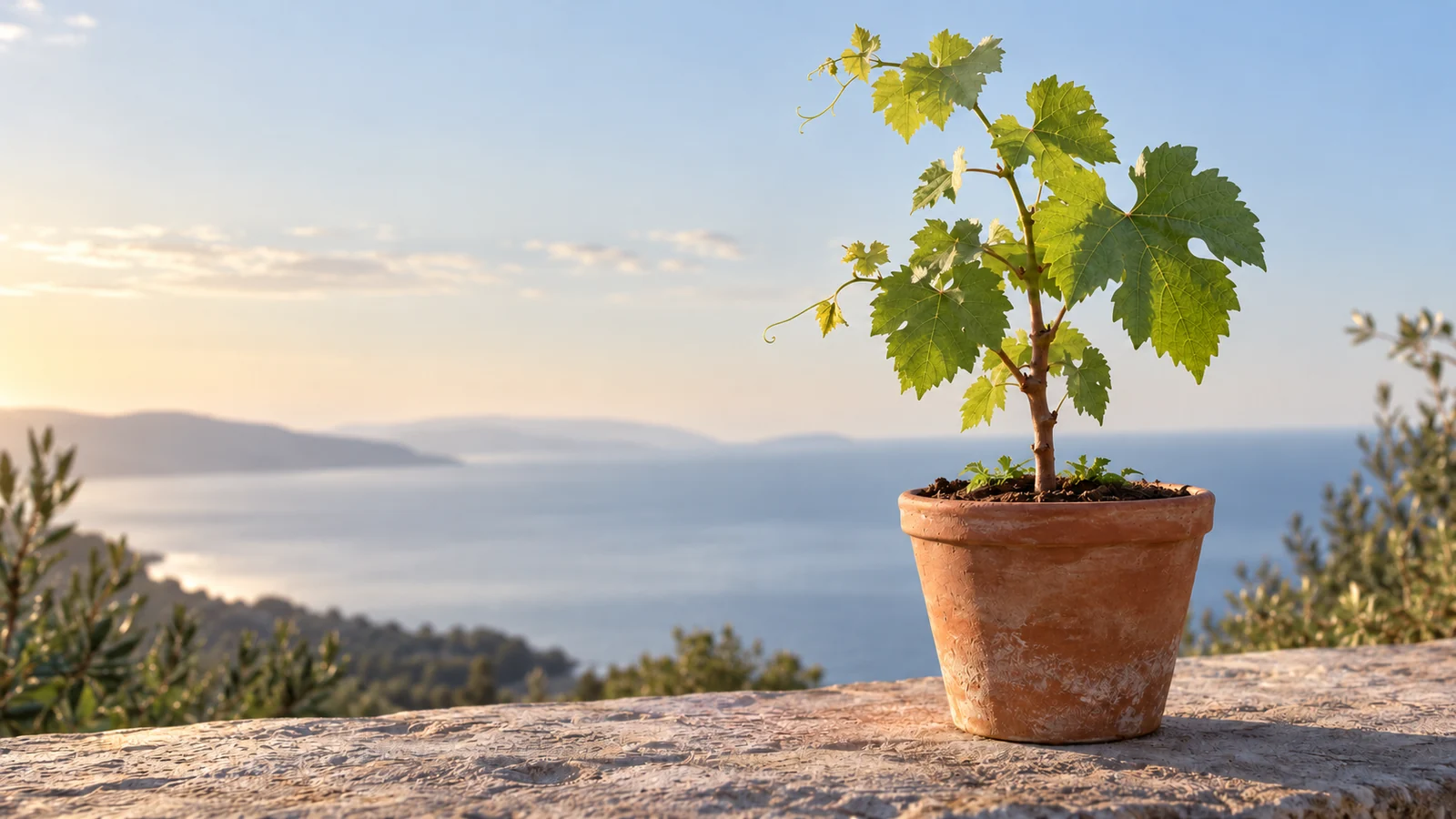
Imagine turning a wine bottle in your hands and finding the word País. On another label, you encounter Mission. The names seem to point in different directions: one toward a country, the other toward a religious institution.
Neither name tells you who pruned the vineyard, shaped its storage jars or decided where the wine would go.
In the previous Cellar Journal article, we looked beyond the monastery wall to the people who made the medieval vineyard possible. Now the journey crosses an ocean. The question comes with us.
Moving a vine was only the beginning. Making a vineyard depended on land, knowledge, labor and power.
This is a history of introductions and new beginnings, but also of places that already had histories of their own.
Before the crossing, the land was not empty
The arrival of European wine grapes was not the arrival of the first grapes in the Americas. North America has native grape species; Vitis vinifera, the species central to this particular story, has a different geographical origin. A wild American grape and an introduced vinifera variety are not interchangeable botanical claims. NPS, native grapes
Nor did fermentation arrive on an otherwise inexperienced continent. At Cerro Baúl in southern Peru, research on a Wari brewery has investigated the production of chicha using molle berries long before Spanish colonization. That is evidence of a different fermented drink, not proof of precolonial European-style grape wine. Field Museum, Wari brewing research
These distinctions open the story rather than interrupt it. They allow an introduced plant to be genuinely new to a place without making its existing cultures disappear.
Here we follow selected connections in Spanish America, chiefly in territories now called Mexico, Peru, Chile, Argentina and the United States. The colonial cases span different centuries and institutions. They are not a complete history of every American wine culture, nor one uninterrupted voyage from a Spanish port to a modern bottle.
Across the Atlantic, then beyond it
Once we move from the ocean to the mainland, a single arrow becomes a poor guide.
Pablo Lacoste’s historical study follows the development of vineyards in Peru, Chile and Cuyo during the colonial period. Peruvian production found important markets in Lima and the mining center of Potosí. Mendoza, founded by an expedition from Santiago in 1561, belonged to the colonial province of Cuyo within the Kingdom of Chile; vineyards and wineries followed in its early development. Lacoste, South American wine history, 2004
The modern national map can hide those connections. For this story, a mountain crossing, a market and an administrative relationship can matter more than the border familiar to us today.
But a route for selling wine is not automatically the route by which a particular vine arrived. A settlement’s foundation is not automatically the date of its first harvest. Keep three journeys in view: the movement of a living plant, the transport of a finished drink and the circulation of people who knew how to cultivate and make it.
That is why the Atlantic crossing belongs near the beginning, not at the end, of the explanation. The plant still had to find a place in a working landscape.
Parras: a mission was also a network
At Santa María de las Parras, founded in 1598 in northern New Spain, Katherine Moore McAllen’s research brings Jesuits and secular landowners into the same wine economy. It also identifies Spanish and Tlaxcalan Indigenous patrons whose contributions helped furnish the Jesuit church of San Ignacio. Moore McAllen, Parras research, 2019
The picture is more interesting than a lone missionary with a vine. Religious institutions, commerce, patronage and local relationships were intertwined.
The Tlaxcalan presence matters here because “Indigenous” should not become a synonym for an unnamed, interchangeable worker. This particular source identifies patrons. Other sources, in other places, describe people compelled to labor. Neither role should swallow the other.
The useful question is therefore specific: who held which position in this community, at this time?
An owner, a donor and a cultivator may all belong to the history of a vineyard. Their participation does not imply equal authority, equal freedom or the same share of its income. Naming the relationship helps us understand the institution rather than simply admire its façade.
A cutting still had to become a vineyard
A small failed enterprise can teach us as much as a celebrated foundation.
Historian Sergio Antonio Corona Páez describes Juan González de Paredes’s attempt to establish a wine-producing estate near Saltillo around 1640. It had vines and winemaking equipment, but repeated frosts frustrated the project. Corona Páez, account of his archival research
The point is not to turn one failure into a verdict on an entire region. It is to notice the distance between possessing a plant and sustaining a harvest. A voyage could deliver planting material; it could not guarantee the result.
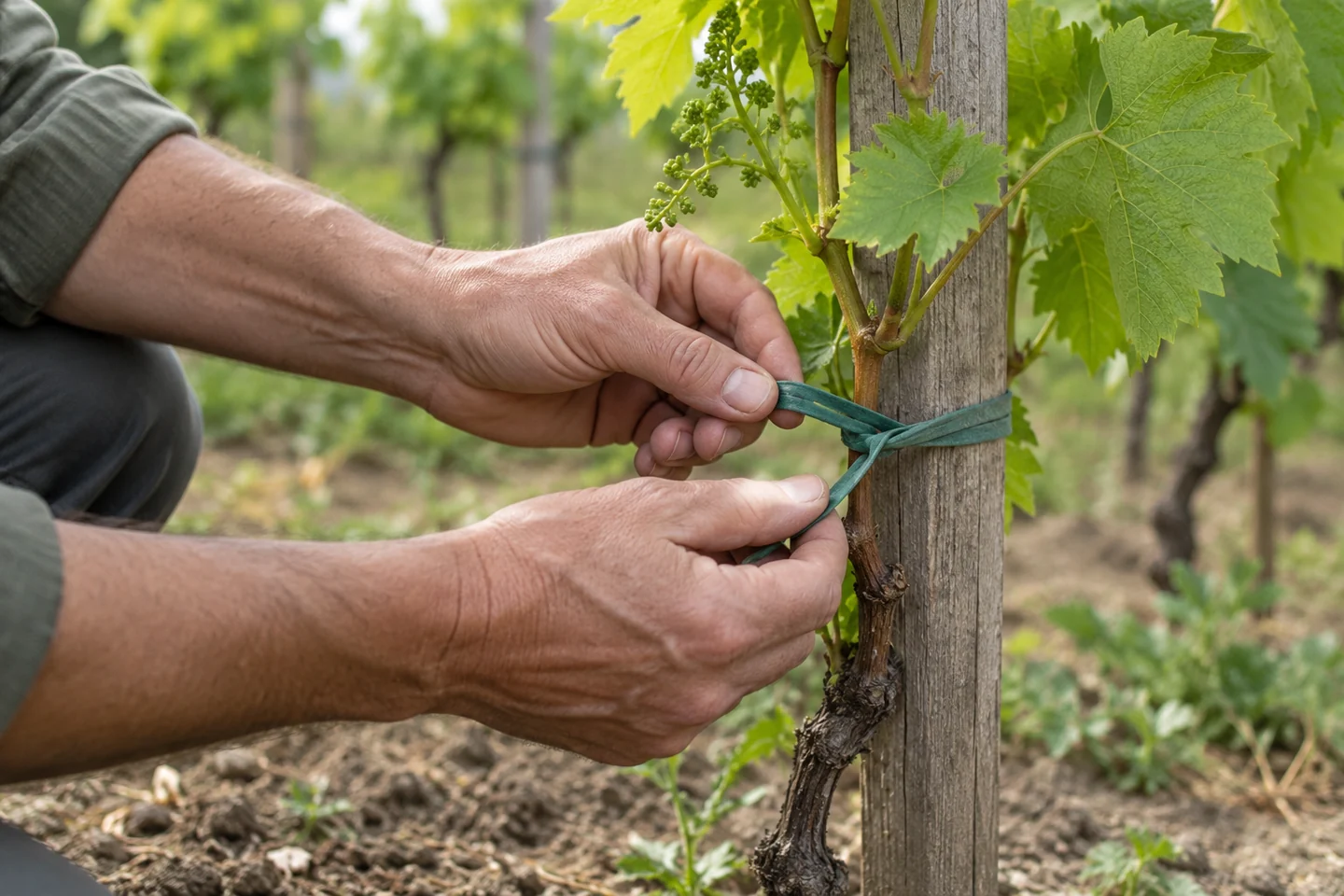
Further south, Lacoste’s archival study of Mendoza and San Juan describes different ways of arranging vines: overhead arbors, supported structures called braceros, and low, head-trained vines. Its account makes wooden supports, irrigation and recurring cultivation work part of the vineyard’s history. Lacoste, vineyard cultivation, 2010
Those details make an old vineyard easier to see. Rather than picturing a green patch appearing after a founding ceremony, picture decisions about where growth would be carried, how water would reach it and what needed attention again.
This is a change of scale: from the person credited with bringing a vine to the work that made the next season possible.
The crossing could happen once; the care had to continue.
Nasca: the jar has a human history
Now leave the planting story for two vineyard estates in coastal Peru: San Joseph de la Nasca and San Francisco Xavier de la Nasca.
The Haciendas of Nasca Archaeological Project, or PAHN, explains that Jesuit acquisitions beginning in 1619 helped finance schools in Lima and Cuzco. These properties became producers of wine and brandy, relying heavily on enslaved Africans and their descendants. Wine was therefore part of an income-generating enterprise, not only a provision for religious services. PAHN, estates and wine production
The project’s exhibition Naming the Enslaved makes the people harder to overlook. It identifies Diego Bran and Bernal Balanta among the enslaved potters’ assistants named in an early property title. Later, the two estates’ 1767 inventories recorded 584 enslaved women, men and children. That number describes a population, not 584 adult vineyard workers. PAHN, Naming the Enslaved
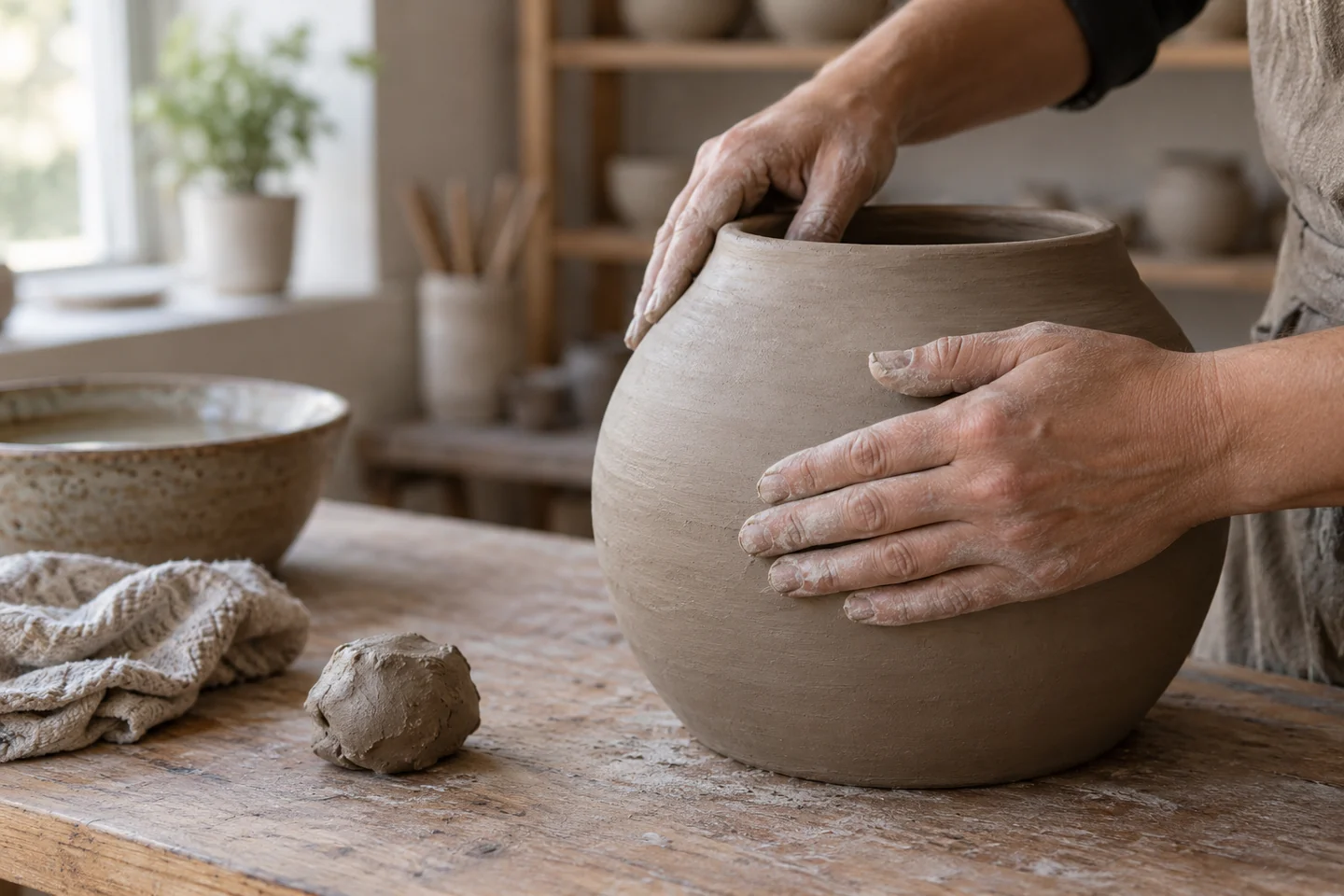
Pause at the pottery. A story told only through vines and presses would miss a craft that helped make storage and movement possible. It would also miss the people whose skill was recorded within an institution that treated them as property.
Recognizing that skill does not soften slavery into an apprenticeship or an ordinary employment arrangement. Expertise and coercion can appear in the same history. They answer different questions: what someone knew, and under what conditions that knowledge was used.
Brendan Weaver’s archaeological research looks beyond production spaces to household life, ceramics and foodways. It identifies ways enslaved people expressed and sustained meaning within coercive institutions. Weaver, dissertation abstract, 2015
That does not authorize us to invent a potter’s thoughts or reconstruct a family’s conversation. It does give us a fuller way to look: the estate’s owners were not the only people with knowledge, practices or a cultural life.
The jar belongs to the wine story, and the person who made it belongs there too.
California: knowledge traveled with Indigenous workers
Farther north, the familiar mission story changes when we ask who taught whom.
Historian Julia Ornelas-Higdon describes Franciscans seeking a local wine supply for the Eucharist while compelling Chumash and other Native Californians to work in vineyards. Her account also identifies Indigenous workers brought from Baja California missions to teach local people grape cultivation and winemaking. Ornelas-Higdon, CSUCI research interview, 2023
Knowledge was not moving only from a European religious figure to an Indigenous learner. Experienced Indigenous workers also carried and transmitted it.
That is a significant contribution, and it deserves to be named without disguising the coercive system in which it occurred. Recognizing a teacher’s expertise does not establish that the teacher or the learner could freely choose the circumstances.
The dates need similar care. In his historical reconstruction, Thomas Pinney distinguishes the Franciscans’ arrival in 1769 from a clear reference to planting vines at San Juan Capistrano in 1779. The institutional beginning and the documented cultivation are different events. Pinney, California mission chronology
A foundation date can fit neatly on a plaque. A vineyard’s development takes more sentences: supply, planting, learning, work and harvest. Giving it those sentences does not diminish its history. It gives more people a place within it.
One grape, several names—and more than one family
Return to the labels from the opening.
A 2007 genetic study of representative historical grape accessions from the Americas identified Listán Prieto under names including País, Criolla Chica and Mission. It also found Muscat of Alexandria and distinct offspring among the material studied. The results connect particular varieties and families; they do not make every grape called criolla the same grape. Milla-Tapia et al., 2007
A shared varietal identity is an intriguing connection. It is not a claim that every vineyard is the same age, that every grower inherited the same practice, or that the wines must taste alike.
The family tree also remains a subject of research. A study published on 26 June 2026 supports ancestry from Listán Prieto and a Manai-related Muscat lineage for the Rosa del Peru type 2 accessions it examined in Baja California. Its authors distinguish that result from earlier Muscat of Alexandria parentage and acknowledge the need for broader sampling. Hernandez-Martínez et al., 2026
This is a finding about particular plant material, not a replacement history of all American grapes. Genetic relationships can suggest questions for historians; they do not identify a ship, a passenger or a particular ocean crossing by themselves.
For a wine lover, the reward is not a simpler legend. It is the pleasure of discovering that familiar names can contain relationships we had not noticed—and that those relationships still leave room for different local histories.
Four questions to bring back to the bottle
Historical curiosity becomes most useful when it helps us ask better questions in the present. Here is an editorial reading aid, not a test that authenticates a vineyard or grades a wine.
The plant: what is actually identified? Ask for the variety’s name and the basis for any historical identification. “A traditional local grape” and “a genetically identified accession” are different levels of specificity. A family relationship is not the same as identity.
The place: what continuity is being claimed? The age of a property, the history of a variety in a region and the age of the living vines need separate explanations. An old foundation date does not establish all three. Ask which part of the story is documented.
The people: whose work is visible? Look beyond the founder to growers, cellar workers, craftspeople and communities. Ask whether the history distinguishes ownership from expertise and whether it names coercion where the evidence requires it. The point is understanding, not adding a decorative human anecdote.
The present bottle: what has this producer made? Turn back to the actual wine, its place, vintage and production choices. Leave room for your own response. A historical connection can deepen interest without obliging you to enjoy a flavor or to award a higher score.
This is the kind of curiosity the Ask Sommelier AI Cellar Journal hopes to encourage: follow a name far enough to learn something, then return to the glass with more attention rather than a predetermined verdict.
Let the history enrich your questions, not replace your experience.
History belongs to living communities
The people in these histories are not simply a supply of details for modern wine storytelling.
Weaver, Miguel Fhon Bazán and Lady Santana Quispe’s work on heritage in Nasca describes archaeological research undertaken in consultation and collaboration with communities descended from the estates’ enslaved populations. The conversation continues beyond the archive and the excavation. Weaver, Fhon Bazán and Santana Quispe, 2022
That offers a useful reminder about our own role as readers. Learning a name is a beginning, not possession of someone else’s past. We can follow the research, recognize its limits and pay attention to the communities involved in interpreting it.
A story can become more accessible without becoming ours to simplify into a slogan.
Back to the glass
The two labels from the beginning now invite different questions. Not simply “Where did this grape come from?” but “How did it become part of this place, and whose work made that possible?”
The Atlantic crossing remains important. So do the less spectacular acts that an origin story can leave outside the frame: maintaining a vineyard, passing on knowledge, shaping a vessel and sustaining a life within unequal circumstances.
We do not have to turn that history into a tasting note. Understanding it is worthwhile in its own right.
A vine can cross an ocean. A wine culture is made by people.
Next in the series: Phylloxera: The Insect That Forced the Vineyard to Change. We will move from the circulation of vines to a crisis that changed the questions growers had to ask about them.
Questions worth asking
Did Europeans bring the first grapes to the Americas?
No. Native American grape species already existed. Introducing Vitis vinifera is a different claim from introducing the first grape plant, and neither claim establishes the beginning of all fermentation. NPS, native grapes Field Museum, Wari brewing research
Are País, Mission and Criolla Chica the same variety?
They are names associated with Listán Prieto in the cited genetic research. That does not make all criolla grapes identical or establish the identity of every individual vineyard without checking its plant material. Milla-Tapia et al., 2007
Was colonial wine produced only for the Mass?
No. The Nasca estates’ wine and brandy helped finance Jesuit schools, while the Parras research places religious and secular participants within a commercial wine economy. Religious ownership and commercial production could coexist. PAHN, estates and wine production Moore McAllen, Parras research, 2019
Did missionaries do all the growing and winemaking?
No. The California account identifies Indigenous labor and teaching, while the Nasca research documents enslaved African and African-descendant workers. These are specific histories, not one uniform labor system across the Americas. Ornelas-Higdon, CSUCI research interview, 2023 Weaver, dissertation abstract, 2015
Can DNA reveal the exact route a grape traveled?
Genetic evidence can support identities and relationships. Identifying an exact historical journey also requires historical evidence. The 2026 Rosa del Peru study separates its genomic findings from a proposed transport hypothesis. Hernandez-Martínez et al., 2026
Does a heritage grape guarantee an ancient-tasting wine?
No such guarantee follows from varietal identity. A genetic result concerns the plant material examined, not a recovered colonial tasting experience. Ask separately about the present producer, vineyard, vintage and wine. Milla-Tapia et al., 2007
Sources and further reading
Research accessed on 6 October 2026. Original source titles are retained for identification. Access notes distinguish full passages from abstracts and interviews; the sources do not endorse this publication.
R01 — U.S. National Park Service. Native Grapes. Undated institutional page. Botanical context; native grape species are distinct from the introduction of Vitis vinifera.
R02 — Field Museum. The secret to a stable society? A steady supply of beer doesn’t hurt.. 18 April 2019. Institutional account of research at Cerro Baúl; the associated full research paper was not independently accessed.
R03 — Alejandra Milla-Tapia, José Antonio Cabezas, Félix Cabello, Thierry Lacombe, José Miguel Martínez-Zapater, Patricio Hinrichsen and María Teresa Cervera. Determining the Spanish Origin of Representative Ancient American Grapevine Varieties. 2007 · American Journal of Enology and Viticulture 58(2):242–251. DOI: 10.5344/ajev.2007.58.2.242. Abstract and bibliographic record consulted through Universidad de La Rioja; full paper not accessed.
R04 — Pablo Lacoste. La vid y el vino en América del Sur: el desplazamiento de los polos vitivinícolas (siglos XVI al XX). 2004 · Universum 19(2):62–93. DOI: 10.4067/S0718-23762004000200005. Selected colonial-history sections; modern rankings and reconstructed production totals are not used.
R05 — Katherine Moore McAllen. Jesuit Winemaking and Art Production in Northern New Spain. 2019 · Journal of Jesuit Studies 6(2):294–314. DOI: 10.1163/22141332-00602006. University repository abstract consulted; full article not accessed.
R06 — Sergio Antonio Corona Páez. Itinerario de una tesis. Acequias 23 · Universidad Iberoamericana Torreón · web publication date not established. Author’s account of his research, not an independently inspected original estate record.
R07 — Pablo Lacoste. Parrales, braceros y cepas de cabeza: el arte de cultivar la viña en Mendoza y San Juan (1561–1869). 2010 · Historia 43(1):5–40. DOI: 10.4067/S0717-71942010000100001. Historical cultivation practices; braceros refers to a training system in this context.
R08 — Proyecto Arqueológico Haciendas de Nasca (PAHN). Haciendas of Nasca Archaeological Project — PAHN; Wine and Brandy. Undated project webpage. Project account of its research sites and their production context.
R09 — Proyecto Arqueológico Haciendas de Nasca (PAHN). Naming the Enslaved: Nasca Hacienda Inventories. Undated digital exhibition; records discussed include 1619/1620 and 1767. Digital interpretation of archival records; the original manuscripts were not independently transcribed.
R10 — Brendan Joseph McKinney Weaver. “Fruit of the Vine, Work of Human Hands”: An Archaeology and Ethnohistory of Slavery on the Jesuit Wine Haciendas of Nasca, Peru. 2015 · PhD dissertation, Vanderbilt University. Dissertation abstract consulted; full dissertation not accessed.
R11 — California State University Channel Islands, featuring historian Julia Ornelas-Higdon. CSUCI History faculty member celebrates the forgotten force behind the California wine industry with new book. 13 November 2023. Institutional interview read through indexed text; the complete book was not consulted.
R12 — Thomas Pinney. A History of Wine in America: From the Beginnings to Prohibition. 1989 · University of California Press. Selected mission-history passages and notes, not the complete book or underlying correspondence.
R13 — Rufina Hernandez-Martínez and colleagues. A “mission” to uncover: genomic evidence supports the hybrid origin of Rosa del Peru, a patrimonial grape of the Americas. 26 June 2026 · Genetic Resources and Crop Evolution 73, article 221. DOI: 10.1007/s10722-026-02852-2. The result is limited to the material examined; proposed transport history is not a confirmed itinerary.
R14 — Brendan J. M. Weaver, Miguel A. Fhon Bazán and Lady Santana Quispe. Heritage and the Archaeology of Afro-Peru: Community Engagement in the Valleys of Nasca. 9 March 2022 · Historical Archaeology 56:131–152. DOI: 10.1007/s41636-021-00309-0. Publisher abstract consulted; the complete article was not accessed.